Multi-positioning and support seating
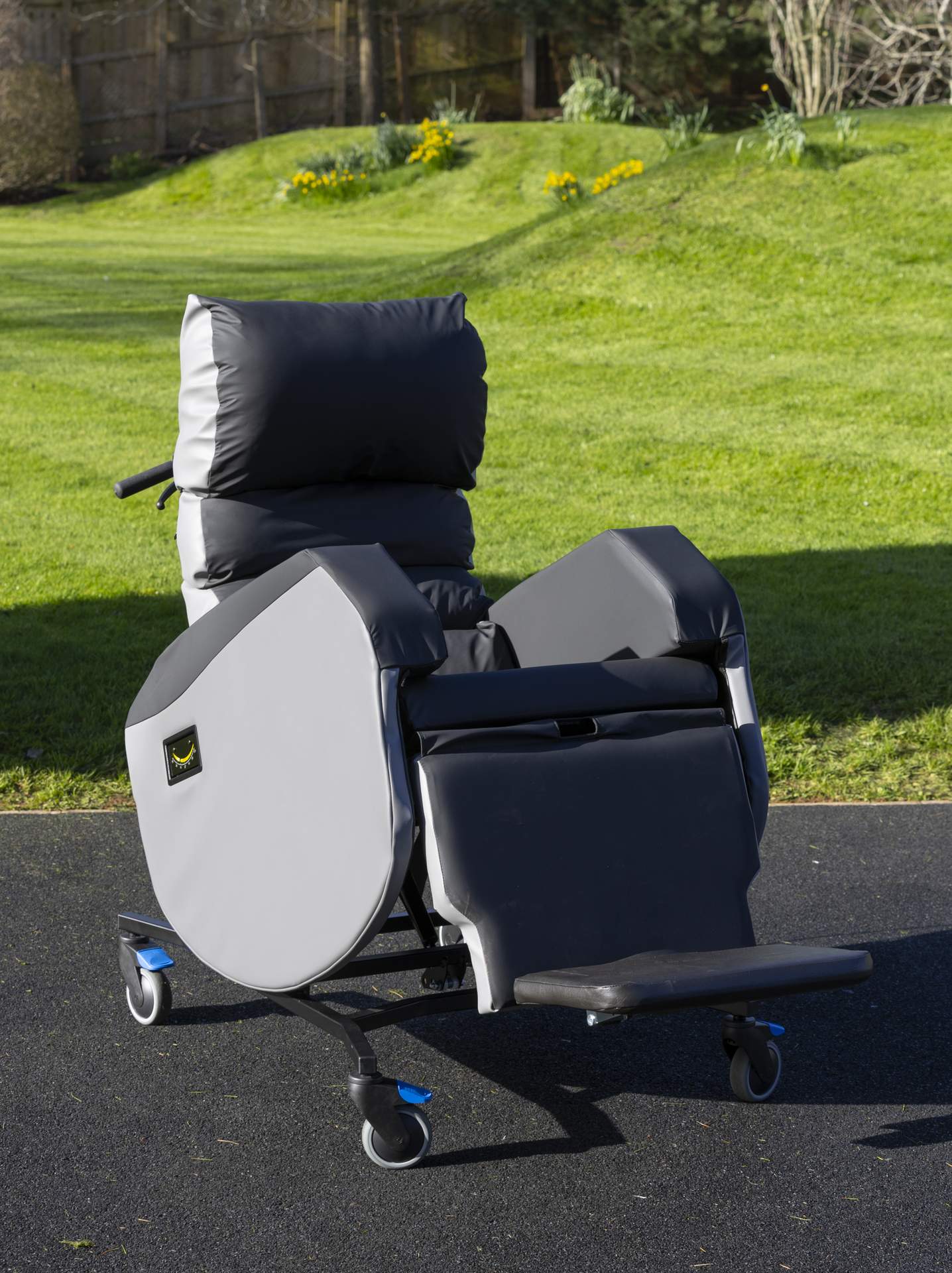
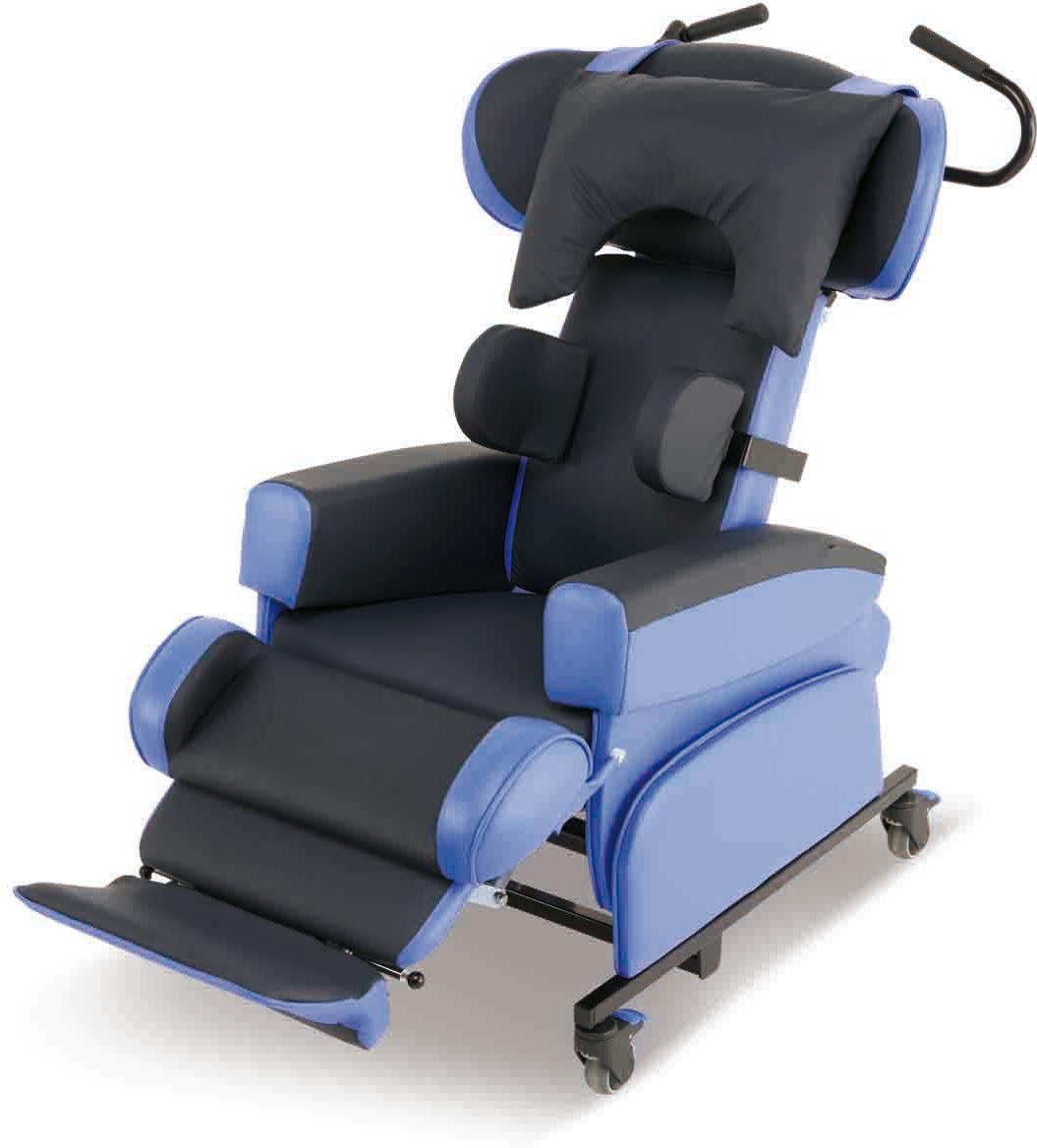
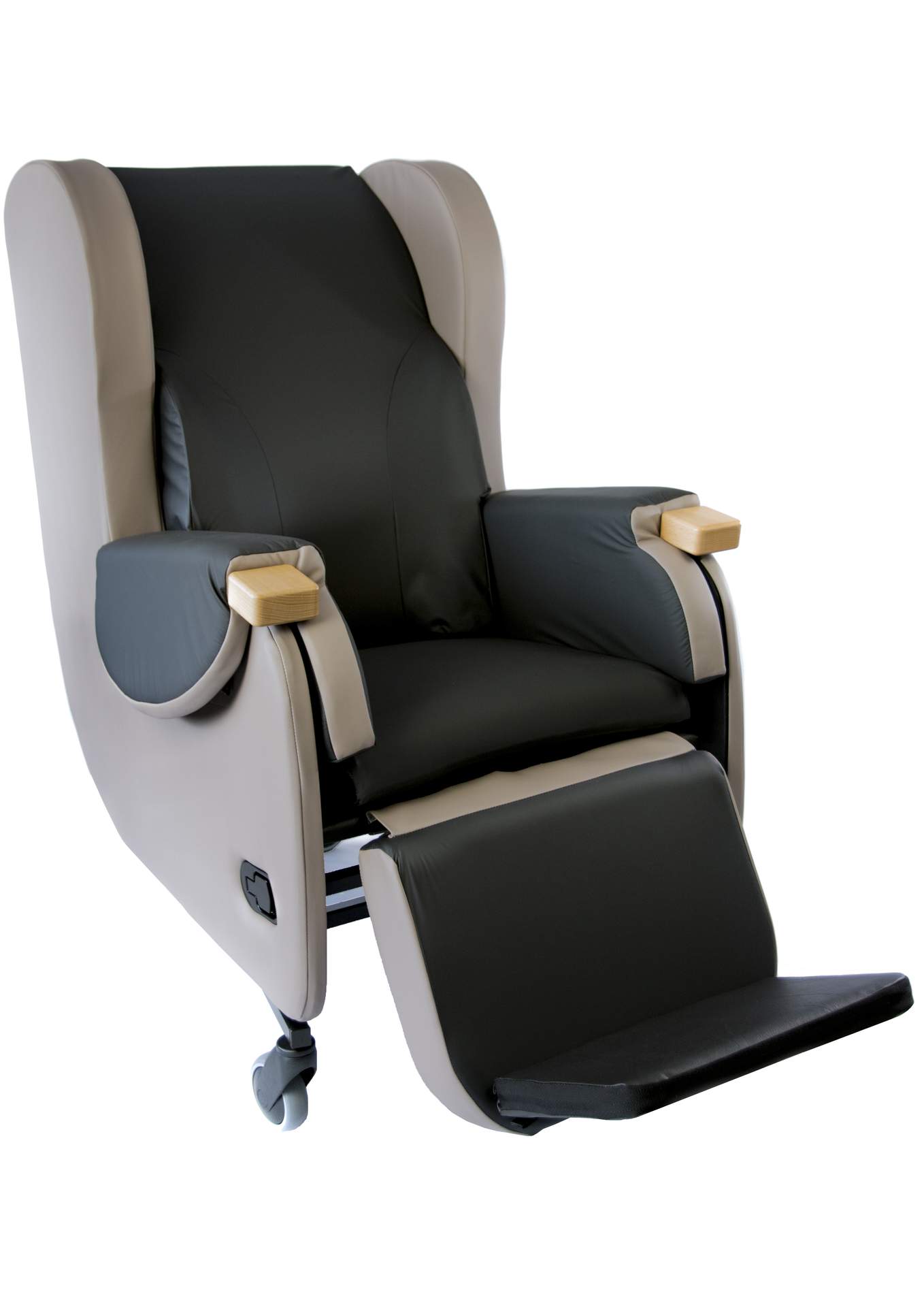
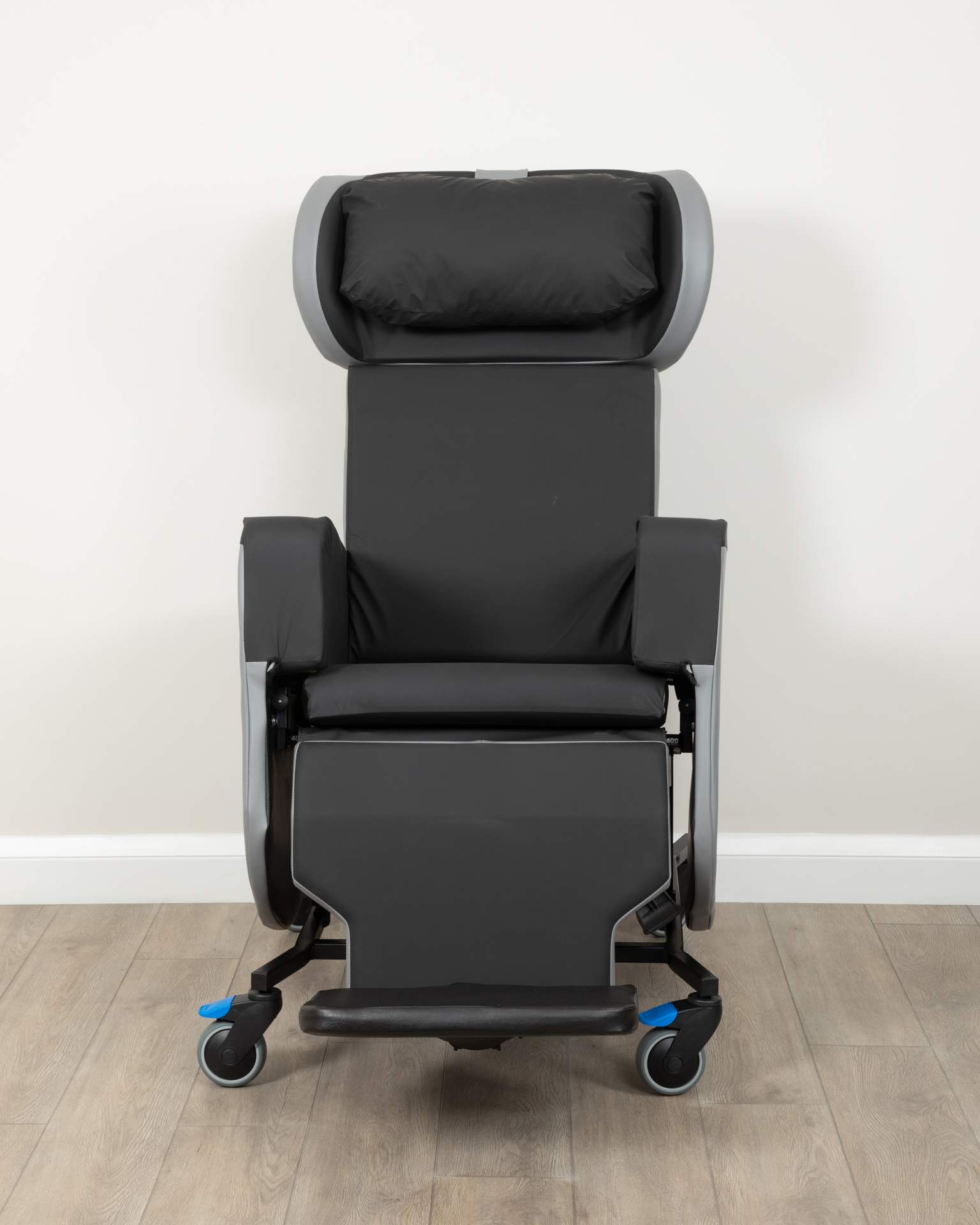
This section includes chairs and seating that is designed to provide additional support for adults and children. Some chairs are designed to accommodate the size and weight of a heavier user, some can be made-to-measure. Some chairs have integral pressure relieving cushioning. Some have integral pressure relieving cushioning.
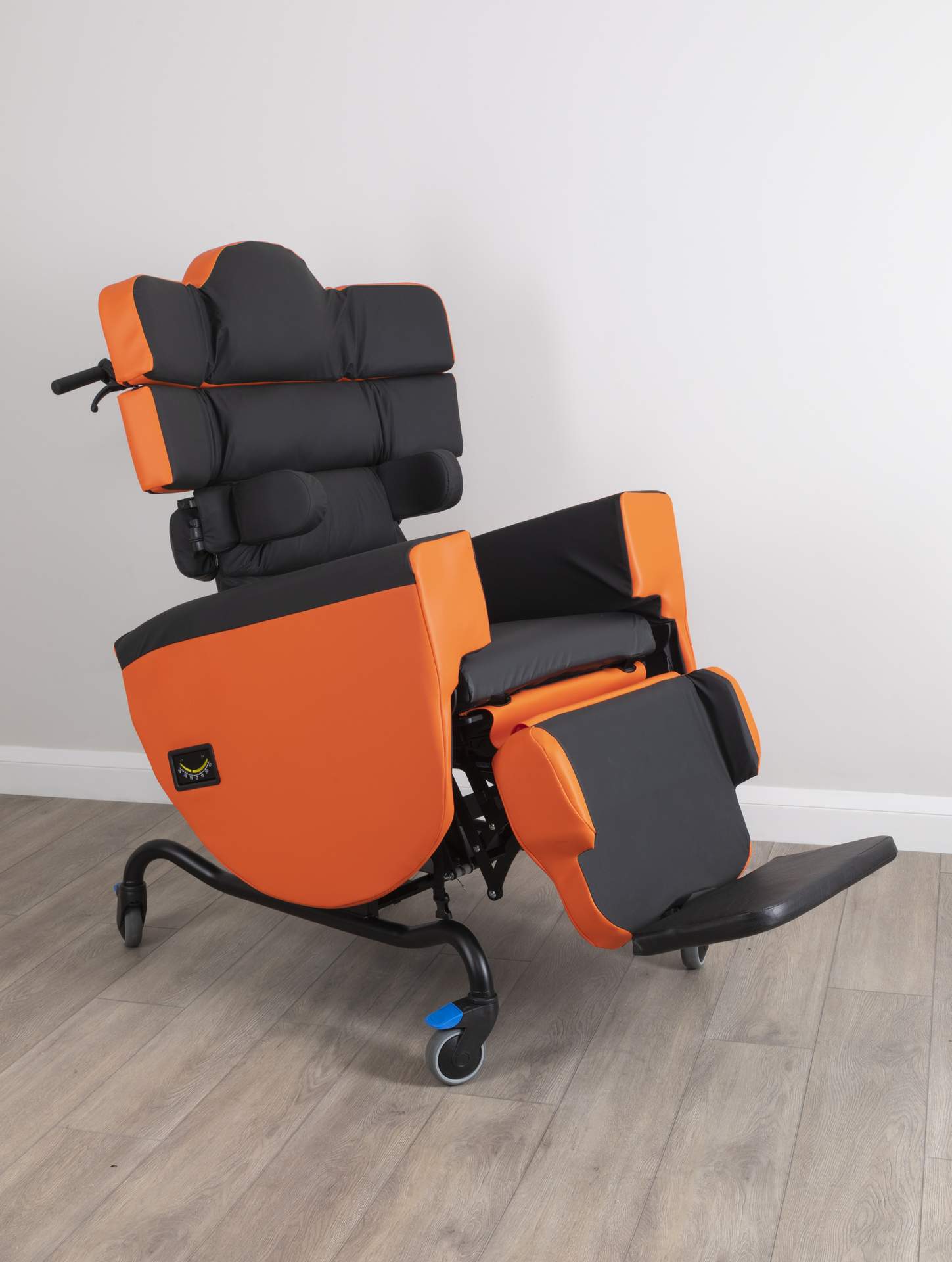
Tilt in space seating where the backrest and seat maintain the same angle in relation to each other when they recline.
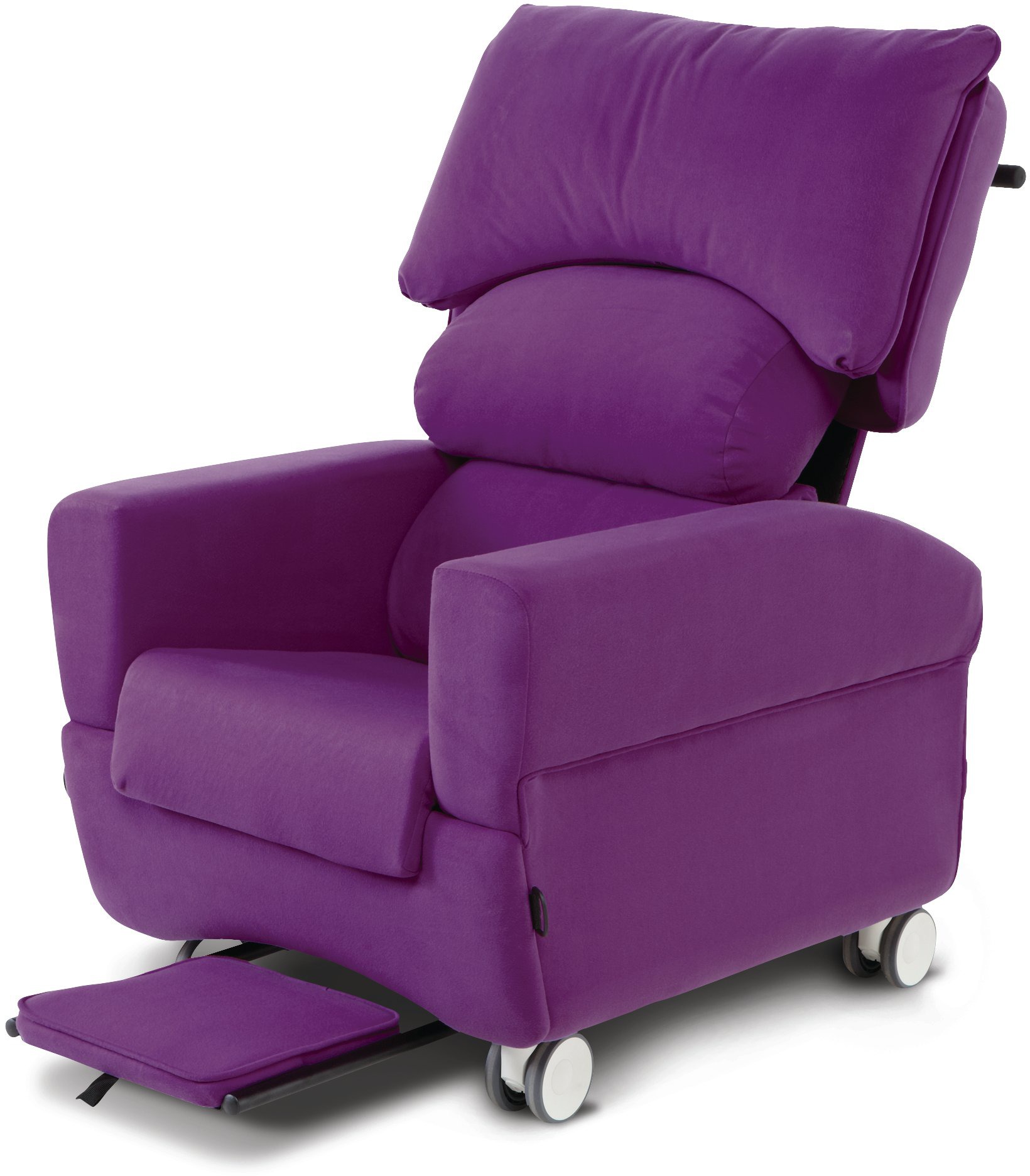
Multi-adjustable seating provide a great degree of adjustability and a high level of support for people who cannot be supported in standard chairs. These chairs are available for domestic use but many will be used in other community or healthcare settings.
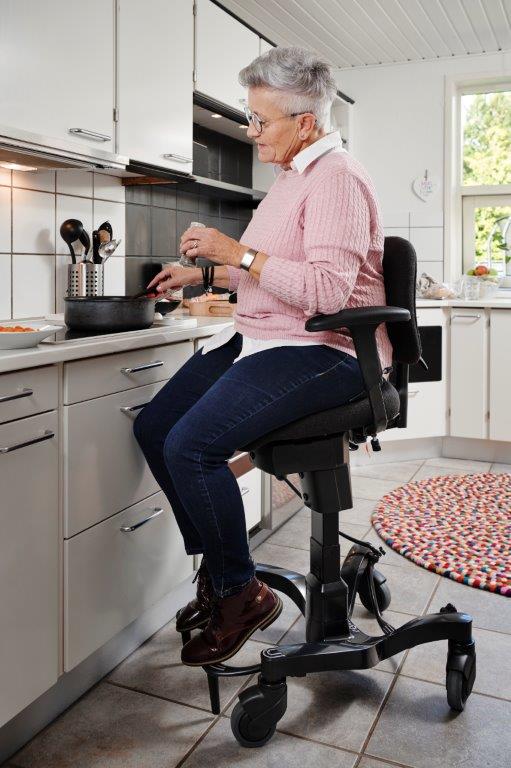
Activity seating that can be adjusted in height to allow access to the dining table, or other standard height tables. Some of the chairs adjust instantly in height by either a manual or powered mechanism. Others may need to be fitted to an extension frame.
Bead filled bean bag style seating, supplied with or without a frame, can provide an alternative type of seating for relaxing. Those supplied with a suitable frame are designed to offer more supportive normal sitting heights which would make it easier to carry out activities such as multi-sensory play.
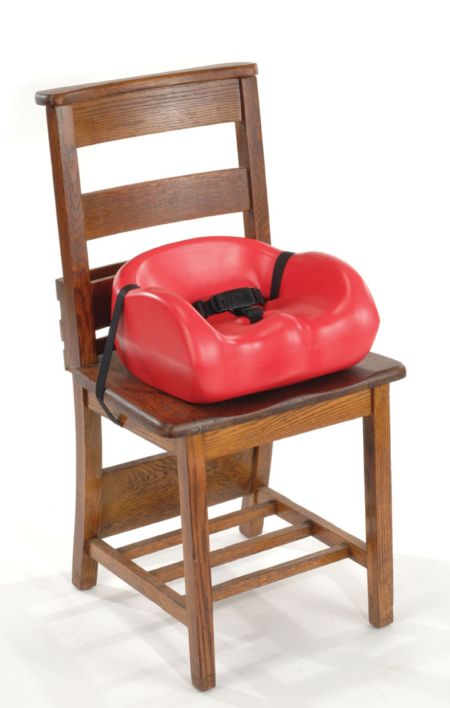
Deep seat chairs with a backwards sloping seat, designed to provide a more comfortable and secure seating position for users who require more postural support and/or may experience involuntary movements. Generally, this type of seating is foam based, of robust construction and has minimal or no structural components for adjustment.
Hip spica chairs are specifically designed for children who have had hip surgery and are in a 'hip spica' cast which immobilises the hip joints and/or the thigh.
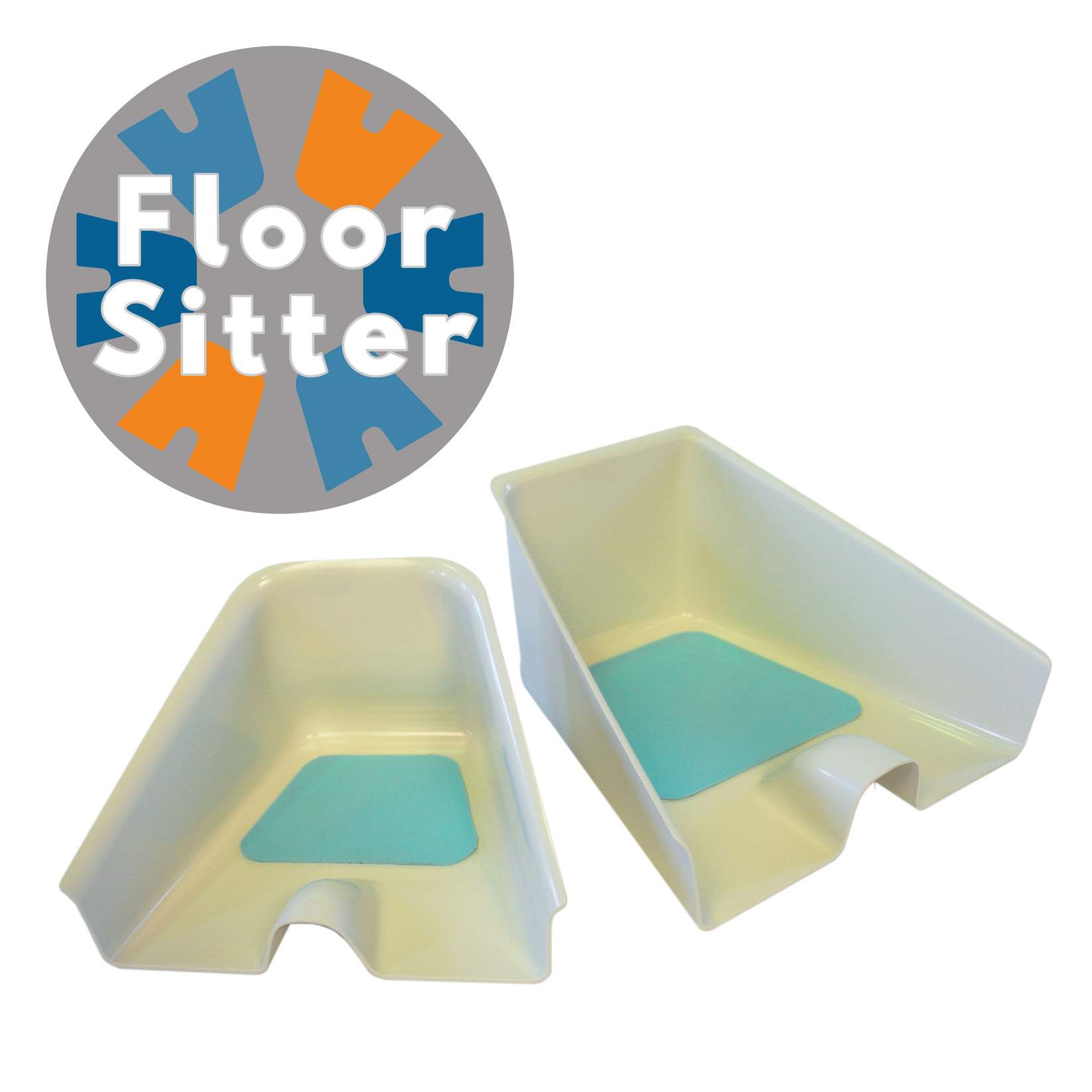
Corner and floor sitter chairs provide support for children who are developing sitting balance but who are inclined to fall back or sideways if they overstretch. They have a V-shaped backrest providing support at the back and sides of a child. On some models, the height of the backrest can be adjusted which varies the amount of support provided. Many have a pommel at the front to keep the legs apart (abducted). Tables or trays are also available from most suppliers. Extended floor supports at the back of the chair or a large base will increase its stability. Small children may want to spend a lot of time on the floor as this is the usual place for playing. Therefore these chairs may enable children to interact more easily with others as they can be at the same level for making eye contact.
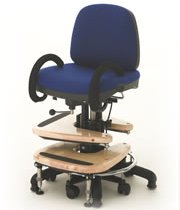
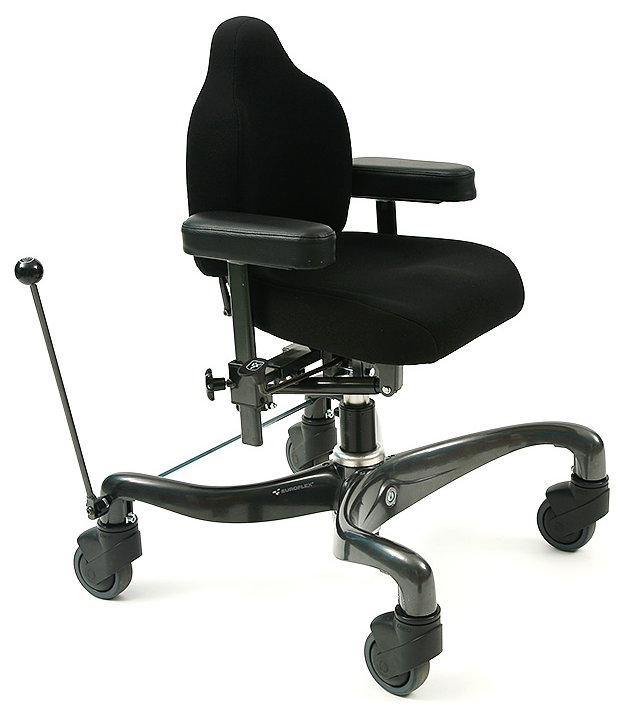
Office style chairs have optional supports and accessories for children and young people with disabilities. They are often used as a child's classroom chair. They have castor bases (with brakes) and adjustment in the seat height, backrest angle and seat tilt. They may have armrests and options for increased postural support such as a pommel, trunk supports, headrests and footrests.
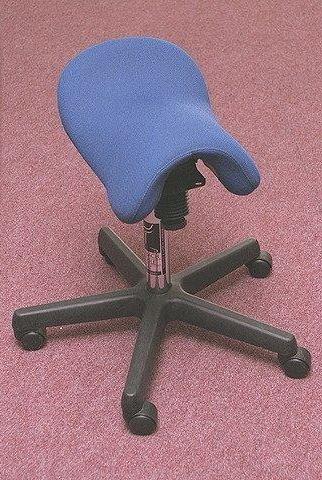
Straddle/bolster and saddle seats can be useful for a child who has good trunk and head control, but whose legs push tightly together. Sitting astride these seats takes the legs apart and may bring on more normal muscle tone. This can make it easier for a child to have control of their arms for activities such as eating and school work. Saddle seats require a child to get a secure 'footplant' to gain pelvic stability whereas the contours of a straddle seat will position a child's body.
Seating accessories for postural support and comfort such as headrests, side supports, pommels and back supports.
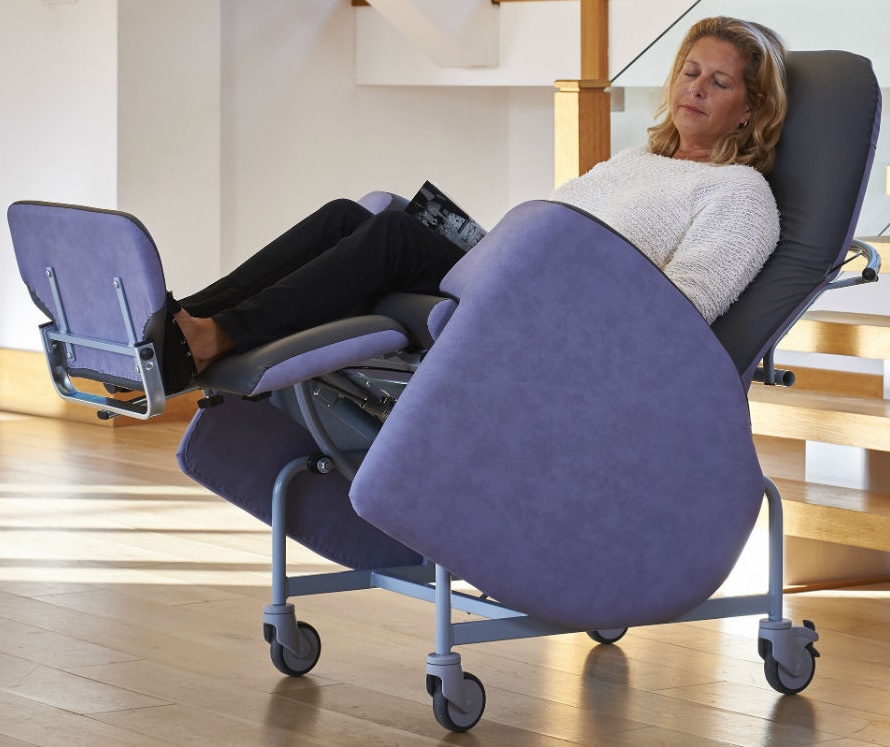
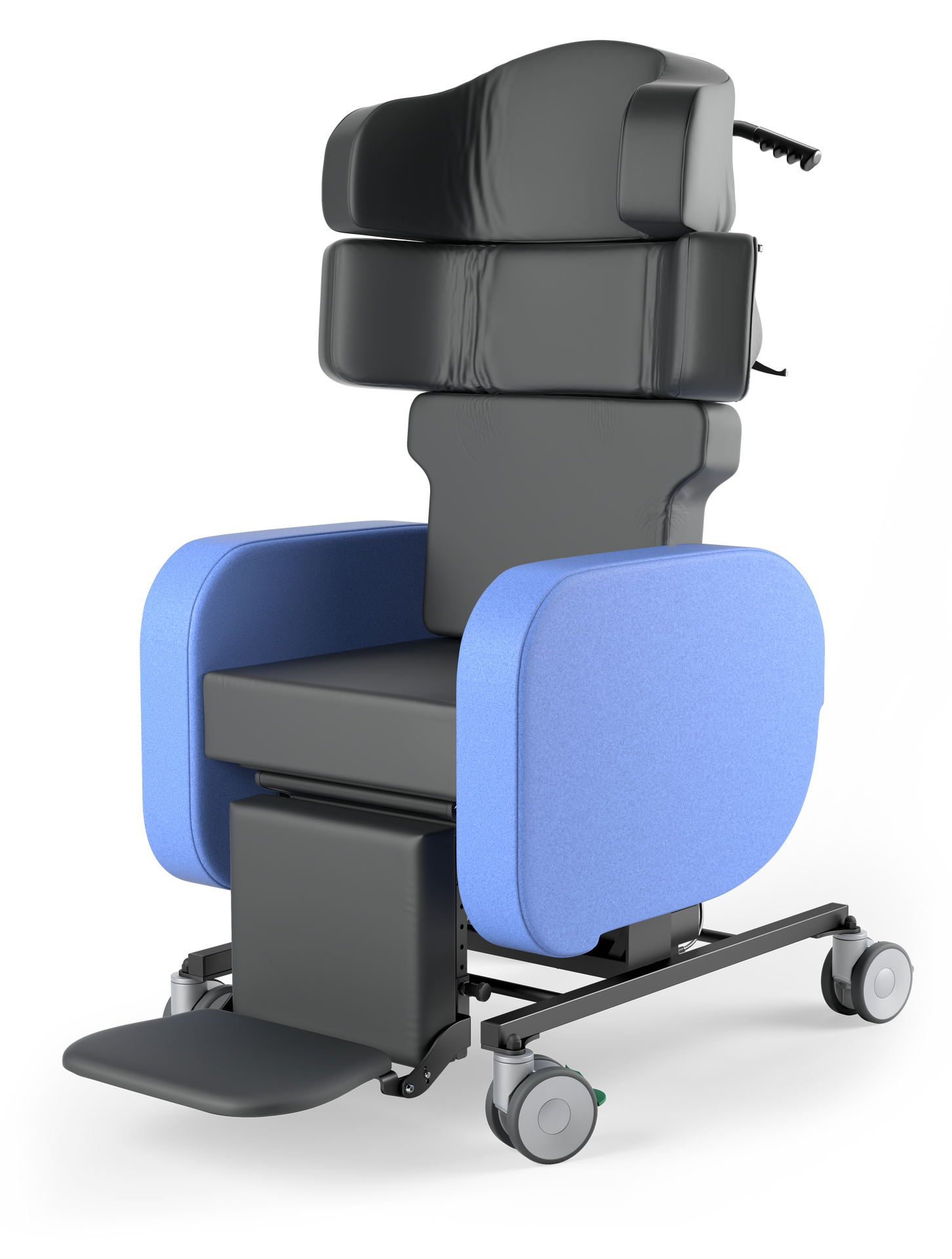
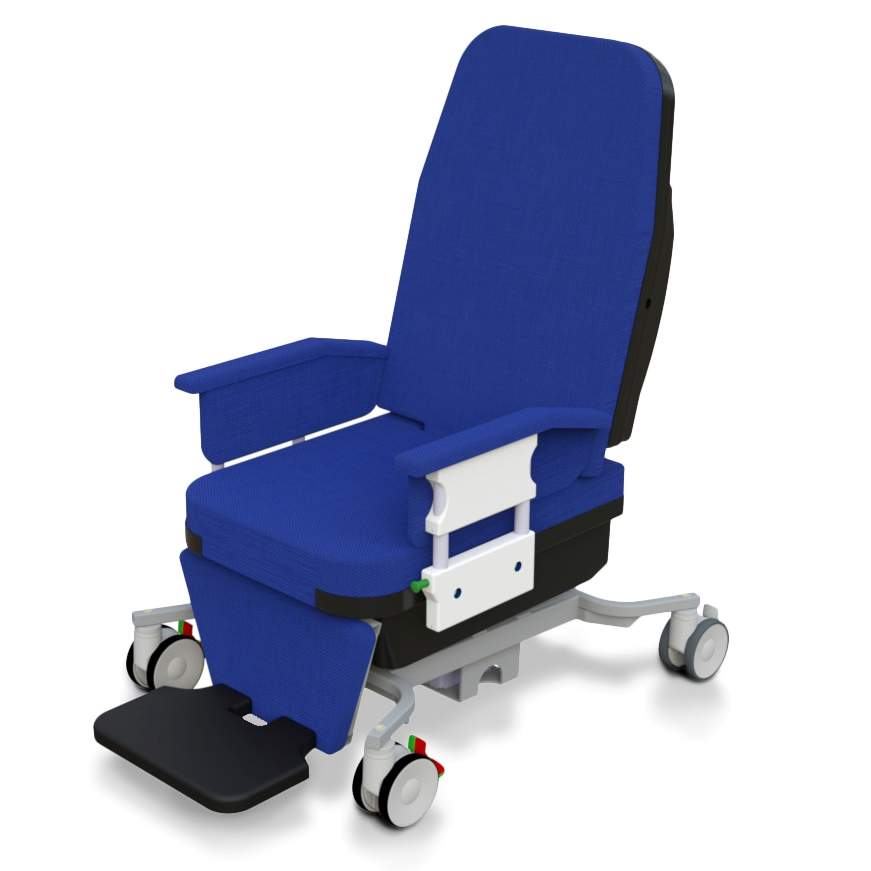
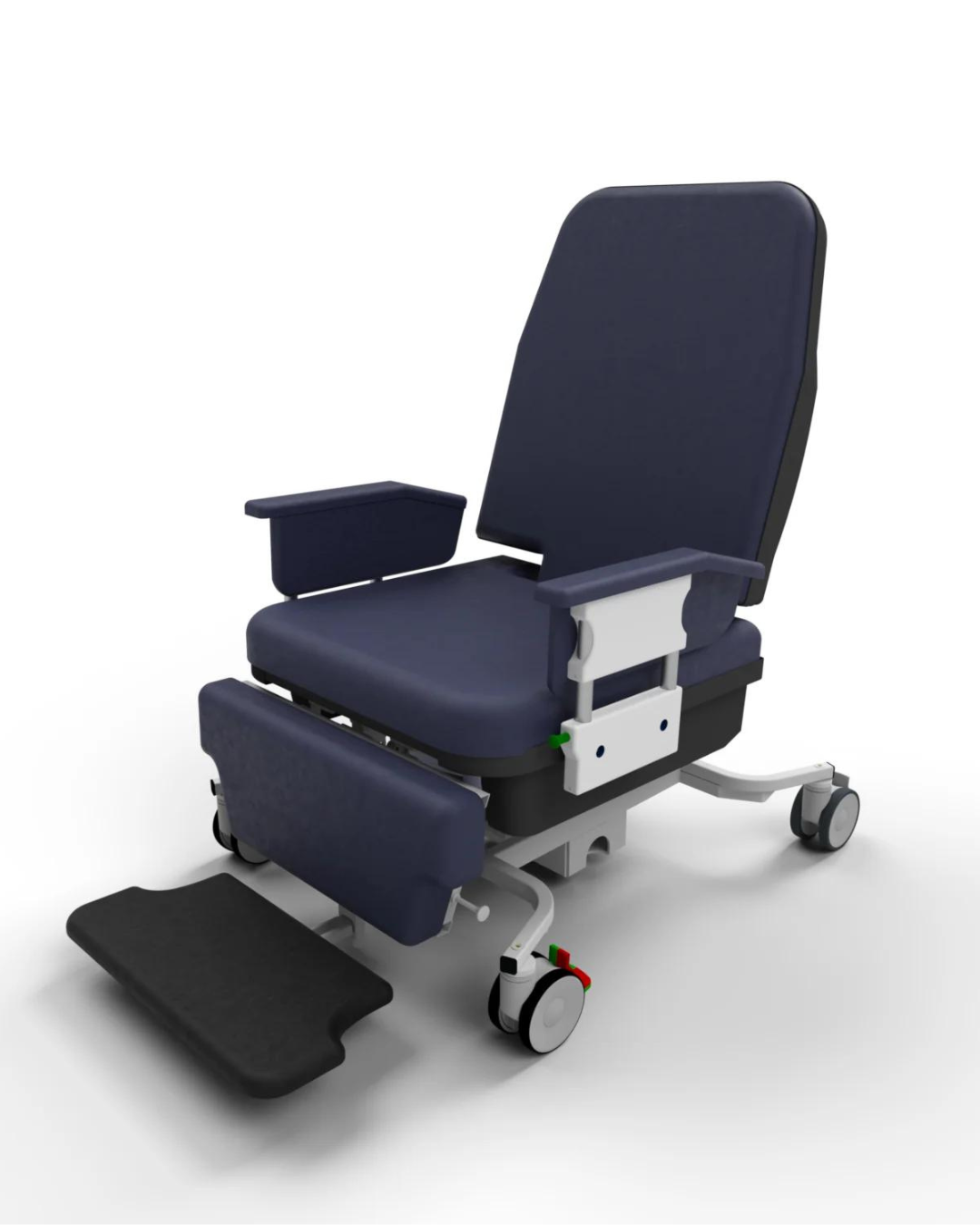
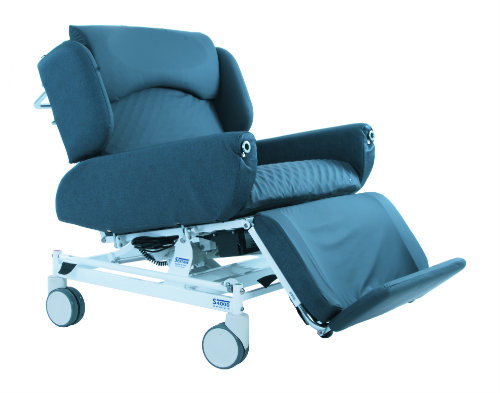
The most supportive and functional of our therapeutic chairs, Phoenix™ is suitable for highly dependent patients with complex needs.

Disclaimer
This factsheet is for advice and guidance only. It is not intended to replace advice from a medical professional. Please ensure you follow manufacturer’s instructions for use and that you carry out appropriate risk assessments.
Introduction
If you spend long periods of time in a sitting position, it is vital that you have a chair that is tailored to your needs to maintain comfort, well-being and independence. Your size, height, degree of mobility and any existing pain can influence your choice.
There are a number of factors about yourself to consider:
- Your mobility: This is your ability to move around. It includes walking, sitting down and standing up (sometimes called transferring) and adjusting or moving your body within the chair.
- Your balance: This is your ability to remain steady when standing, when seated and especially when moving between the two.
- Your posture: This is the position in which you hold your body.
All of these can be affected by many things including age, tiredness, a medical or physical condition, medicines, sight and cognitive ability. Consider how all these factors will be affected by, and will affect, your use of the chair. As well as comfort, it is important that you consider safety when choosing a chair.
Consider the activities you wish to do (e.g. moving about, socialising, watching television, reading, using the telephone, writing, drinking, eating, knitting) when buying or adapting a chair. Different activities require different amounts of space for movement, different postural positions, degree of support and level of comfort.
It is good to move around regularly throughout the day. Try to use other chairs, if they are safe and comfortable, to carry out your different activities. For example:
- Move to sit at the dining table to eat.
- Use a perching stool in the kitchen if you have a surface with knee room underneath.
- Use a perching stool in the bathroom to wash if you find standing difficult.
Considerations when choosing a chair
The internal dimensions of the chair (seat height, width, depth and backrest height) need to match your size to ensure it offers adequate support. When you are sitting, the support that the chair gives you from underneath should be evenly spread beneath your bottom and legs, with no points of pressure. The support to your back should enable you to relax, helping you to keep a safe and comfortable position, again with no points of pressure.
It is also worth bearing in mind the overall dimensions of the chair if space is limited. If the chair is going to be reclined regularly, make sure that there is sufficient room behind the chair for the backrest to move into.
It is advisable to try out a range of chairs before buying, as slight differences in the slope and angle of the backrest, or the position and style of armrests, can make a huge difference to individual comfort.
Important dimensions and features
Seat height
The height of the seat can determine how easy it is to get in and out of the chair.
- A high seat will make it easier to stand up and sit down, particularly if you find it difficult to push up using your arms or if you have any pain or weakness in your legs.
- However, if the seat is too high, your feet will not touch the floor, and it may feel uncomfortable under your thighs. A seat that is too low will be more difficult to get out of, and will direct pressure towards the pelvis rather than distributing it evenly along the thighs.
- The correct seat height can be calculated by measuring the distance from the floor to the crease at the back of your knees. When seated, your hips and knees should be at approximate right angles whilst your feet are flat on the floor.
To measure the height of the seat of your current chair, make sure you do this when you are sitting in it, taking into account the amount that the cushion or seat compresses. The seat height of a well-used older chair with softer cushions is likely to be significantly lower.
Most high seat chair manufacturers have a range of chairs with a seat height between 46-59cm (18-24in). Some will make other heights to order. If you need a very high seat to make standing easier, but need support for the feet when seated, try using a footstool. However, if you struggle to get on/off a chair, you may also be experiencing difficulty transferring to/from a toilet. You may benefit from a grab rail on the wall by the toilet, a raised toilet seat or a seat and frame over the toilet.
Seat width
The seat should be wide enough to allow you to sit comfortably whilst reading, writing or knitting, but narrow enough to enable you to make use of the armrests. Ideally, it should be the width of the widest part of your bottom/hips plus approximately 5cm (nearly two inches) on either side.
Seat depth (front to back)
The seat needs to be deep enough to support the full length of the thighs. If the seat is too deep, you will have to lean back to provide support for your shoulders. This may cause you to slump in the chair and the cushion may rub behind your knees. A deep seat may also cause your bottom to slide forwards in the chair. If it is too shallow, your thighs will not be supported properly and after a while you may be uncomfortable.
To calculate the correct depth, ensure you are sat with your bottom at the back of the chair, with your lower back supported by the back of the chair. Use a firm cushion to support your lower back if you need to. Measure the distance from the chair back, or the cushion, along the thighs to approximately 3cm (1.5in) behind the back of your knees. You may need to allow more space if your calf muscle is particularly curved.
Backrest height and shape
Your back and head should be supported, especially if the backrest is going to tilt backwards. When sitting, measure from the seat to the top of your ears to give you an idea of minimum height required.
Comfort is often determined by the shape of the backrest. It should be gently curved to match the natural curve of the spine.
Many older people have a rounded back and shoulders which make it difficult to get the correct support, unless special cushions are used. People with a marked curvature of the spine may find a softer, canvas or angled backrest more comfortable.
Backrest angle
The backrest should be angled slightly backwards. If it is too upright, it can be tiring as you will constantly be trying not to lean forwards. However, if it slopes too far back, it may force you to slide forwards on the seat.
Headrests
Adjustable headrests can be positioned where the support is most needed. They should be easy to adjust and be secure when fixed. Some wrap around the back of the chair and the height can be adjusted. Others are on bands which lie over the top of the chair back and are fixed behind.
Headrest wings
These do not have any real functional purpose, so it is down to personal preference whether you choose a chair with wings. They may help to support your head if you have a tendency to fall asleep in your chair. Whenever possible, it is better to lie down on your bed to have a proper sleep rather than to catnap. Even if the wings can provide some support for your neck, leaning your head to one side puts a great strain on the muscles and ligaments in your neck. Subsequently, you may have to lean forwards to see round them.
The armrests
These should provide side support, help you to stand up and be wide enough to support your forearms when relaxing. Padded armrests provide more comfort. When seated in the chair, your forearms should rest comfortably along the armrest without hunching your shoulders or leaning to one side.
To help you stand up, the ends should be easy to grip and level with the front edge of the seat. Those made of bare wood with rounded ends are ideal. Armrests that have padded or have scrolled ends may be more difficult to grip, and those with square fronts may be painful to push down on.
The armrests should be at least the same length as the seat. If they project further forwards to give more support when standing, the front legs of the chair should be splayed.
Drop-down or removable armrests can help you get in and out of the chair from the side, e.g. from a wheelchair. Filled in armrests may be warmer and exclude draughts, and small objects such as TV remote controls are less likely to fall onto the floor. Smokers should be aware that lighted cigarettes, if dropped, will get trapped and be a potential fire hazard.
Practical considerations
The seat
Usually, chair seats have springs or are foam filled. If the seat is too hard, it may feel uncomfortable to sit on. If it is too soft, the chair frame may protrude through the cushion. Chairs should be made of good quality foam so that the air can flow freely within them. Cheaper foams give good support initially, but may sag after only a few months.
Some suppliers now incorporate pressure relieving features in the standard seat. This may be worth considering if you find it difficult to adjust your position or sit for long periods.
The legs
These can be splayed or straight. Splayed legs offer greater stability, especially when someone is pushing down on the armrests. If they stick out too far, they may get in the way.
If the front legs are joined by a cross bar or are filled in with upholstery, you may not be able to position your feet under the chair. This could make standing up more difficult. They can also get in the way if you use a hoist for getting in and out of the chair.
The upholstery
Ideally, this should be warm and slip-resistant. If possible, avoid materials that cause sweating. Manufacturers offer a wide range of upholstery in a variety of colours and designs. Some companies will also allow buyers to send them their own choice of fabric.
Although vinyl can be cleaned easily, it tends to be slippery and can cause sweating. A sheepskin cover is soft and warm and will absorb moisture. It also allows the air to circulate so that you do not become too hot. For people who have continence problems, there is a choice of upholstery that is waterproof and has an attractive finish.
The larger/smaller user
If you are very small or very large, you may find it difficult to get a chair which is the correct size. Some suppliers will make modifications, such as reducing the seat width and depth for a small person, or reinforcing chairs for someone who is heavier. It is important to know your weight before purchasing a chair. Always check the capacity of the chair to ensure that it is strong enough to take your weight.
Made-to-measure chairs
If you have a chair adjusted to your particular needs, it will cost more than buying a conventional high seat chair. A custom-made chair will be even more expensive. The manufacturer will arrange for a home assessment; but remember that although these companies employ highly trained representatives, most of them do not have a medical background. You are advised to ask an occupational therapist or physiotherapist to be present at the assessment.
British Standards
All upholstered furniture that is intended for private use in a house needs to conform to the Furniture and Furnishings (Fire) (Safety) Regulations 1988 (as amended in 1989, 1993 and 2010). Within each standard there are several parts with tests of increasing severity. Check with suppliers which parts have been met.
Helping you to get in and out of a chair
Many people find it difficult to get in and out of a chair, especially if it is a low sofa type. Reasons for difficulty include painful or stiff joints, muscle weakness, slow reactions or impaired balance. If you are finding it difficult, the various options that can be considered to make it easier include:
- Reviewing your technique.
- Raising your chair.
- Using a standing frame.
- Using a riser cushion.
- Exchanging your chair for a high seat chair or riser chair.
Technique
It is useful to look at how you are standing up and sitting down. Ask for an assessment by an occupational therapist or physiotherapist.
The following sequence of actions may help you to stand up:
- Place your hands firmly on the front of the armrests.
- Lean slightly forwards away from the back of the chair.
- Move your bottom to the edge of the seat, either by shuffling forward by transferring weight from one buttock to the other, or by taking the weight through your arms and lifting your bottom.
- Make sure your feet are apart, one foot below the knee and the other slightly back towards the chair. You will find this difficult if you have not moved to the edge of the chair and the chair has been filled in, or has a rail between the legs.
- Bring your head and shoulders over your knees (nose over toes).
- Lift your head and look straight ahead.
- Push with both arms and legs until you are in an upright position.
If you are using a walking frame, do not pull yourself up on a walking frame or another piece of furniture as they are not secure. Only reach for a walking frame once you are in a stable upright position.
Similarly, this sequence of actions may help with sitting down:
- Move backwards until you feel the front of the chair seat with the back of your legs.
- Spread your weight over both feet. Slightly bend at the hips and knees, lean a slightly forward and reach down for both armrests.
- Keep feeling for the seat with the back of your legs as you sit down gently.
- You should not need to move your bottom back if your knees maintain contact with the front of the seat cushion. However, if you do need to move your bottom back, use the technique that is best for you (shuffling or lifting back), until you are supported by the back of the chair.
- As before, a walking frame must not be used as support when sitting down. Always use the armrests of the chair.
Raising your chair
Chair raisers increase the height of the legs of the armchair, therefore also increasing the height of the seat and the armrests. This makes it easier to stand up and sit down. This is better than raising the height of the seat by adding more cushions, as this has the effect of lowering the armrests and, in turn, they offer less assistance.
Chair raisers are bought in sets of four and are placed under, or clamped onto, the legs of a chair. Some sets come as four individual blocks; others are connected by adjustable length cruciform arms. The latter tend to be more stable. Chairs that are placed on blocks can be quite difficult to move. Always ensure that the appropriate shape or model of raiser is used for the shape of the chair leg, and that the original chair legs and the raisers are secure. Once fitted, the chair should not move or wobble as you use it.
Static standing frames
A static standing frame is a strong metal frame which adjusts to fit under a bed, sofa or chair. There are two handles which extend upwards from the base to provide support for you to push against when standing or sitting. The version for use with a sofa has fold-down handles which allow you to turn and put your feet up if you wish.
High seat chairs and sofas
If you are unable to raise your existing chair or use a static standing frame, you will probably consider buying a high seat chair or sofa. These lounge or fireside chairs have a high firm seat, stable armrests and a high supportive backrest. They are available in a wide range of designs and colours.
More clinical-looking hospital armchairs are also available, which may be cheaper than the wooden framed domestic models. Although they have metal frames and vinyl covers, they can be comfortable and easy to get out of.
Seat riser (raiser) cushions
These are static cushions which provide additional height. These can be used in a standard chair and may suit if your need is only short term. The riser cushion is either placed directly on top of the seat cushion, or the chair cushion is removed and the riser cushion placed on the base of the chair. It adds to the overall height of the seat, but has the effect of lowering the armrests, so that it offers less assistance. As riser cushions tend to be smaller than the dimensions of most seats, they may be uncomfortable to sit on for any length of time. If you are at risk of developing a pressure ulcer, you should seek the advice of an occupational therapist before purchasing one.
The units are portable, so that they can be used when visiting friends or going out - some even have a carrying handle. There is a limited choice of colours, and the covers are usually vinyl or fabric.
Manual seat riser (lift) cushions
These are cushions with a spring or hydraulically operated mechanism underneath which, when activated, tilts the seat surface forward to assist you to get out of the chair. The mechanism can be adjusted according to your weight. More sophisticated models have a combination of seat lift and tilt which provides a better position for standing. They should only be used with an armchair and should replace the original cushion. If you place the riser/lift cushion on top of the original cushion it gives more height, but it may be less stable.
The riser/lift cushion should fit well within the chair without too much movement. With all riser/lift cushions and chairs, consider that the mechanism may be an entrapment risk under British Standard BS8474.
The following points should be considered:
- It is important that the lifting mechanism is adjusted according to your weight. The seat will not work if you are too heavy, or if you are too light it could spring up with such force that it propels you forward suddenly. Some risers are ordered pre-set from the factory; others are adjusted in the home.
- Manual riser cushions or chairs are hazardous in an environment such as a residential home, where someone other than the intended user may sit in the chair. It is potentially dangerous if that person is lighter than the person for whom the chair or cushion was originally set.
- Other than in exceptional circumstances, choose a seat with a locking mechanism that locks the cushion/seat in the down position. This stops the seat springing up unintentionally, e.g. if you lift your weight reaching forward. The lock should have a label clearly indicating the on and off positions.
- You need relatively good hand control to release the lock, and enough arm strength to lift your body slightly from the seat in order to trigger the mechanism. You also need the strength in your legs to keep your knees back as the seat rises.
Powered seat riser (lift) cushions
A number of portable lifting seat units or cushions are available. They tend to have a larger seat than many manual riser units and, as a result, are slightly more comfortable. One advantage of a powered unit is that the lifting action is not weight specific, although you need to check your weight is within the maximum capacity of lift. The movement is usually controlled by levers or buttons on a handset. As they are powered by mains electricity, the units will need to be positioned on a chair near a suitable socket.
Manually operated riser chairs
Manual riser chairs have seats that are hinged at the front edge. When the seat locking mechanism is released, a gas or spring-operated mechanism tilts the seat forward to help you stand up. If using a riser chair, it is important that you have the ability to bring your weight forward and to initiate a push on the armrests. It is also essential that you can position your feet correctly before the seat starts to rise up.
A small number of manually operated riser chairs without a seat locking mechanism may still be available, especially in the second-hand market. They should only be used in exceptional circumstances, e.g. if the user is unable to operate a locking mechanism due to painful or weak fingers.
Powered riser chairs
Less effort is required to stand up from these chairs than from manual seat lift chairs, but the action tends to be much slower. It is important that you have the ability to re-adjust your position as the chair rises. If your feet are not positioned correctly, you may lose your balance when the chair is in the raised position.
Powered riser chairs use mains electricity and need to be placed within easy reach of a socket. They also tend to be larger than other chairs and take up more space. Check with
The control handset for powered chairs usually has push buttons or rocker switches. The latter are easier to use if you have limited hand function. The more buttons or switches there are, the more complicated they are to use. Where appropriate, it is probably wise to have a chair with fewer functions and simpler controls.
There are three different types of powered riser chairs:
- Only the seat rises.
- Both the seat and the armrests rise.
- The whole chair rises - seat, armrests and backrest.
Most powered riser chairs are now of the type where the whole chair rises and the seat tips forward. To use these chairs safely, it is important you have sufficient strength and control of your trunk and legs. There is a risk that you may slip down as the chair rises if your legs are too weak. You need to be aware of your current and possible future ability if your condition is changing.
As with all mechanisms, there may be an entrapment risk. Under British Standard BS8474 , some chairs now have safety devices to stop this. If you are concerned, look for a chair that meets this standard.
Electrically powered riser chairs with a seat rise only
As the seat rises, this type of chair leaves the back and armrests behind. When the chair is in it's ‘up’ position, the armrests are not at a convenient height to push against, and the person has no back support. This kind of chair may be useful to someone who is transferring into an adjacent wheelchair, as the seat rises above the armrests so that they do not impede the transfer. Transferring back into the chair from a wheelchair may not be any easier.
It is possible for objects such as TV remote controls to disappear into the gap between the seat and backrest.
Electrically powered riser chairs with seat and armrest rise
These chairs have a mechanism that lifts both the seat and the armrests up and forwards, so that the user is still able to push down against the armrests when standing up. However, there is no back support when the chair is in a raised position.
Electrically powered riser chairs with seat, armrests and backrest rise
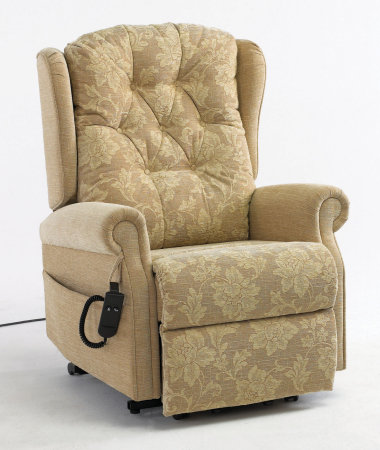
Usually, these chairs have a mechanism that lifts the whole chair, including the seat, backrest and armrests up and forwards. They provide users with all round support when in a semi-standing position, as well as making it possible for them to push down against the armrests, enabling them to stand up more easily.
A number of chairs have a seat that rises vertically without tipping forward (vertical lift option). This is safer for people who need to remain secure for longer and need more time to adjust to the higher position. It is also easier if you use a level sliding transfer especially when the arms of the chair drop down or can be removed. Some companies offer the vertical rise as an option, compared to the standard rise and tip forward.
Reclining in your chair
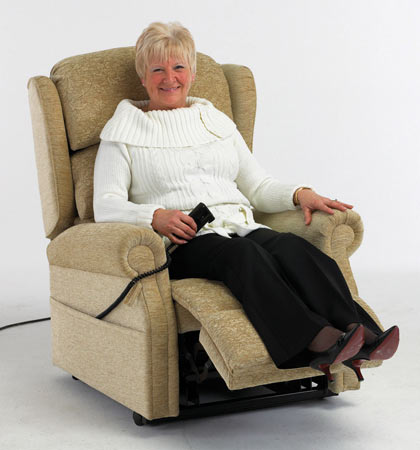
Reclining chairs enable you to alter your position during the day. These are useful if you have a back problem, if you need to relax or sleep during the day or if you have muscle weakness and find it difficult to support your head.
Reclining chairs generally have leg rests that lift up to support your calves. You need to take care not to trap your legs underneath the leg rests, or between the top edge of the leg rest and the chair cushion.
The leg rest on lots of recliners operates simultaneously with the backrest, which is ideal if you only use the chairs for sitting or lying. However, on some models the backrests and leg rests can be operated independently. These may be more suitable if you need to elevate your legs while sitting up.
If you need to recline the backrest without elevating the leg rest, you may tend to slide forward on the seat. In this case, a chair with a tilt-in-space mechanism (where the seat and backrest tilt backwards, maintaining a 90 degrees angle between them) may be the best option. Please see the section on multi-adjustable deep seat chairs.
Manually operated reclining chairs
Some arm and upper body strength is needed to activate the movement of manually operated reclining chairs. A lever/handle is used to release the reclining mechanism while you lean back. Some require you to push back on the armrests, others to pull the armrests backwards.
If this is not possible and the chair needs to be operated by someone else, ensure that the backrest can be reclined and re-positioned when the user is in the chair. If you are buying a chair with a built-in footrest, make sure that you are able to place your feet on the floor under your knees when preparing to stand up. Some footrests prevent you from doing this when they are lowered.
Electrically powered reclining chairs
Most electrically powered reclining chairs have fairly high seats and tend to be wider and more padded than fireside chairs. As they need a power supply, they must be positioned near to a power point to avoid the hazard of a trailing cable.
These chairs are controlled by a handset which may have push buttons or a rocker switch. A person with weak hands may find the latter easier to use. Castors on these heavy chairs enable them to be moved more easily.
Riser recliners
Riser recliner chairs recline in the same way as those mentioned above, but they also have a seat lift. On most models the whole chair rises, which provides the user with support and leverage to get out of the chair.
Chair beds
Sleeping during the night in a standard electric recliner is not generally recommended, except where there is no other option. The chair bed will need to recline to a horizontal position. If the backrest only reclines partially, it is difficult to maintain postural alignment. This may lead to stiffness and pain in the joints.
A chair bed is like a reclining chair which reclines and lifts the legs fully to assume an almost horizontal surface. When fully reclined with the leg rests elevated, chair beds take up significant space. Ensure that there is enough room behind and in front of the chair, so that it can be operated safely, and that there is room to get in and out as required.
Raising and supporting your legs
You may need to sit with your feet up (elevated), either purely for comfort or for medical reasons, e.g. if you have stiff or swollen legs. If your doctor or therapist has advised you to sit with your legs elevated, you should ask them how your legs should be supported. For instance, if you have swollen feet or ankles, you may need to have your legs supported to at least a horizontal position, if not higher, to reduce the swelling effectively. If you have arthritis in your knee, it may need to be kept as straight as possible. Before purchasing or hiring a leg rest or footstool ensure that it will be suitable for your particular needs.
Leg rests and footstools
A footstool only supports the feet and ankles and is usually lower than a leg rest. A footstool may not be suitable if you have a painful, stiff or weak knee, as your knee will remain unsupported. This can put strain on the ligaments behind the joint and could lead to discomfort.
Fixed height foot and leg rests should be tried out for comfort before purchase, as they cannot be adjusted to suit the individual user. Footstools and leg rests which are height adjustable, or which have an adjustable angle top, will be more adaptable to your comfort and needs.
A leg rest should support the legs from the chair edge right down to the feet, providing even support along your lower leg and heel. It is important that the weight of your lower legs is not resting on one point, such as your heels, as this will quickly lead to soreness. An adjustable or tilting leg rest will provide a comfortable support and will distribute the pressure evenly. A number of leg rests are available with T-shaped legs and a slightly concave top. Most are available with a choice of vinyl or fabric upholstery, and wooden or metal frames.
L-shaped rocking leg rests adjust automatically to the angle of the user’s legs. Most have one long and one shorter side, providing downward support for the calves, with support at right angles under the soles of the feet.
The weight of the footstool or leg rest needs to be considered. You need to be able to move it out of the way when you stand up, and put back in place when you are seated. Some leg rests have castors, which can assist in moving them.
Leg lifters
Some people will find it difficult to lift their feet onto, or off a footstool or leg rest. Manual leg lifters are simple tools to help. They comprise of a strap with a loop at the end into which you place your foot. You need adequate strength and dexterity to carry out the task. Some people use the crook neck of a walking stick instead.
Mains powered leg lifters work in a similar way to the built-in leg rest on a reclining chair. The device is attached between the two front chair legs and is hinged at the top. It rises from a vertical down position, through a 90-degree arc to form a horizontal surface. The mechanism is controlled by a hand-held switch and may operate via a hydraulic mechanism or inflatable air bag powered by a compressor.
Chairs with a built-in elevating leg rest
Lots of reclining chairs have a built-in leg rest which operates simultaneously with the backrest. This is ideal if people are using the chairs only for sitting or lying. However, those who want to sit with their feet up while watching television for instance, may find models with independently operating backrests and leg rests more suitable. These enable the leg rest to be raised, even though the backrest is still up straight.
Consider the amount of support that these types of leg rests provide, as some only support from halfway down the calves rather than from the edge of the seat.
Chairs with an independent backrest and leg rest operation have two motors and more buttons to push. You may choose a chair with a simultaneous backrest and leg rest operation as the controls are simpler.
As with all mechanisms, there may be an entrapment risk. Under British Standard BS8474, some chairs now have safety devices to stop this. If you are concerned, look for a chair that meets this standard.
More complex seating needs
Lots of people are not able to maintain a stable and comfortable seated position. This might be for a number of reasons, including muscle weakness or spasm, joint pain, stiffness or deformity, loss of balance or pressure ulcers. A stable sitting position should be one that requires minimum effort to maintain. If you can’t keep a comfortable stable position, it can become very tiring. It is essential that anybody who has complex seating needs should be assessed by an occupational therapist or physiotherapist, who will be able to identify what the difficulties are and what might be the best solution.
In this situation, seek a referral to a specialist seating clinic. Such clinics will carry out an assessment and provide advice on seating in chairs and wheelchairs. The clinics usually need a referral from your GP, an occupational therapist or physiotherapist.
Chairs with adjustable angle seats and backrests
These chairs are usually standard, wooden-framed high seat chairs that have an adjustable seat which can be sloped slightly backwards. Most of these chairs also have an adjustable backrest that can be slightly reclined, so that the overall seat/backrest angle remains at a comfortable 90 degrees. This type of chair may be suitable for somebody who tends to slide or fall forwards in the chair or has difficulty holding their head up.
Deep seat chairs
These chairs have a very deep, backward sloping seat that will provide stability for someone with weak muscles, someone who goes into spasm or experiences involuntary movements. Some have gate-opening armrests to help the user to get in and out.
It is important to consider the following points:
- The very deep, backward sloping seat can make it difficult, even for an independent person, to get out of the chair.
- The handling assessment will often indicate that it is essential to use a hoist to transfer someone who has little mobility into this chair.
- In order to maintain a comfortable angle of around 90 degrees between a sloping seat and the backrest, the backrest needs to be angled back quite sharply. This can alter the user’s line of vision so that they are forced to look towards the ceiling, so balance and spatial awareness may be distorted. Some models have the headrest section angled forwards so that the line of vision of the user is directed forwards, but this can put a strain on the user’s neck.
Cube shaped deep seat chairs
Some deep seat chairs are cube-shaped. They are foam filled with a deep sloping seat, high sides and wide padded armrests. Most have vinyl or easy-to-clean covers. They do not offer much postural support and have a low back which does not support the head.
As the whole chair is made of foam, it does not provide any rigid support, either for the user or the carer, when someone is getting in and out of it. It would be advisable to use a hoist to lift someone in and out of these chairs. An overhead hoist may be the only option, as many of the chairs are wide and have insufficient space underneath to accommodate any other type of hoist.
Multi-adjustable deep seat chairs
These are multi-adjustable, wooden-framed, padded chairs, or metal-framed upholstered chairs that can be tailored to individual needs.
The height, width, depth and angle of the seat on most of these chairs is adjustable, as is the angle of the backrest. Some have a tilt-in-space mechanism, so that the whole seat and backrest unit can be angled backwards to provide a deep seat and then moved forwards again to a horizontal position. This makes it easier for the user when getting in and out.
They also have additional side and head supports that can be fitted and adjusted according to the user’s needs. These chairs are more expensive than standard chairs and therefore are likely to be used only by people who have complex seating needs and who require additional postural support. If a hoist is used to transfer the user in and out of the chair, ensure that there is sufficient access for the hoist around or underneath the base.
Modular seating systems
Modular seating systems are the most adaptable in terms of posture and support and in meeting the most complex needs, but they do tend to have a clinical appearance.
They are multi-adjustable systems, made up of component parts which provide support and stability, and attach to an underlying frame, usually with wheels. Some manufacturers can provide custom-moulded components if necessary, e.g. to support a spinal curvature.
Some systems cater for both children and adults. The components can be replaced as the person grows or changes posture.
Chairs with pressure-relieving properties
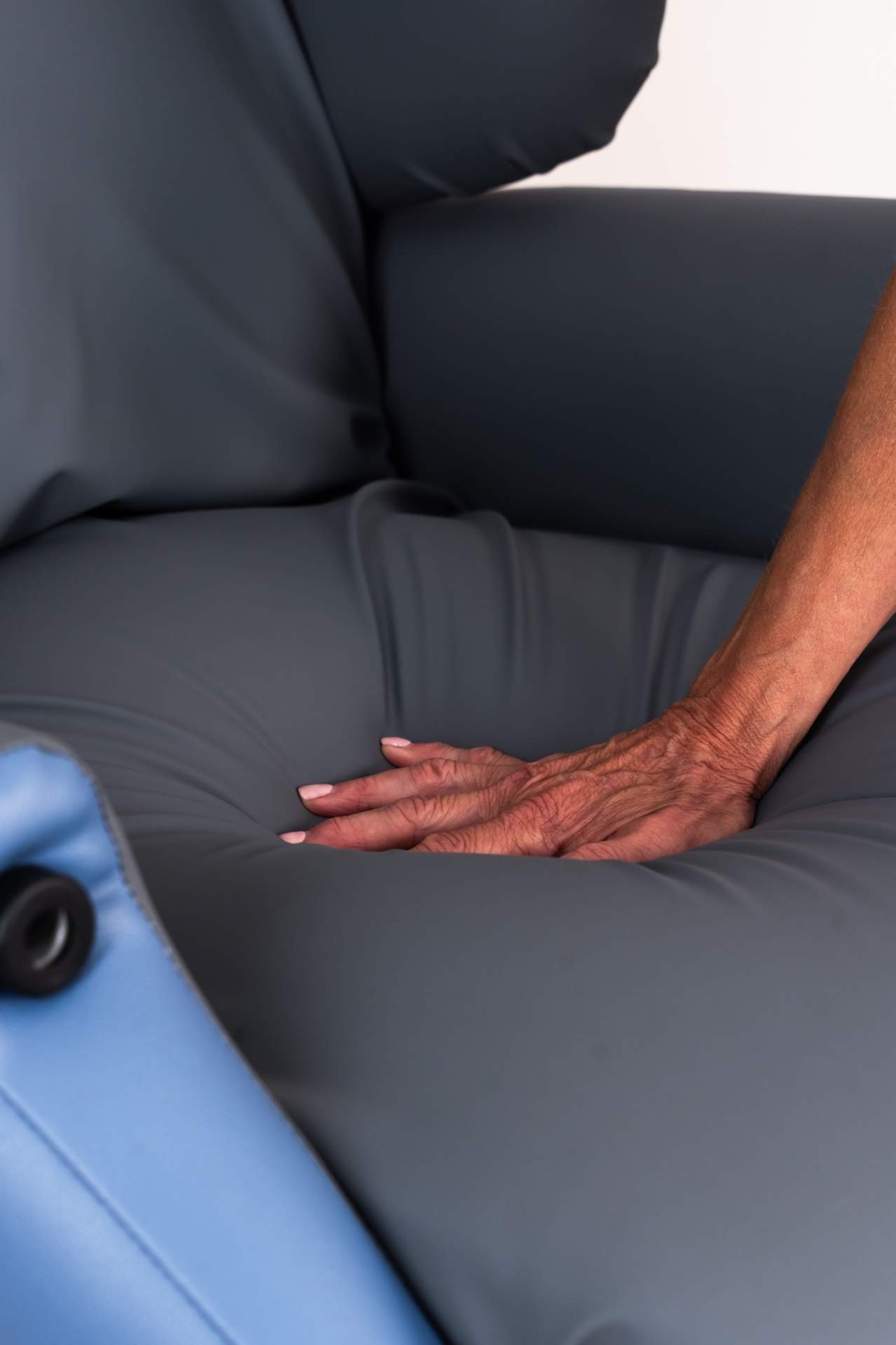
Some chairs come with an integral pressure relief system, e.g. gel, air or water chairs.
Safety straps/harnesses
Straps and harnesses are designed to help provide support and safety for the person using the chair, encouraging them to sit in a safe, stable position. However, the chair itself should be the means of providing the key stability and postural support. Any straps or harnesses must be used in line with any instructions or guidance given by the manufacturer or therapist.
Straps can only ever be used to physically restrain a person in extreme circumstances and under guidance, when the person is at risk of severely injuring themselves. Where a person cannot give consent and measures are taken to restrict a person’s liberty, even in their own home and in their best interests, certain safeguards must be taken. Further information is available from your local authority.
If you need additional support in the chair
Support cushions
Many people can sit quite adequately in a standard armchair, but need additional support for a specific part of the body in order to feel more comfortable. The most common supports are back and neck cushions.
The following types of back cushions are available:
- Non-adjustable back supports: Most are fibre-, foam- or bead-filled with a fabric cover and a rigid contoured base. The user should be sure that it provides enough support in the curve of the lower back (lumbar spine), as they cannot be adjusted.
- Back support with seat: These are similar in construction to those above, but have an attached, shaped seat.
- Modular back supports: These have a firm, contoured backrest with an adjustable height pad which can be moved up and down to alter its position. so that it provides the most comfortable support for the user.
- Inflatable back supports: These can be inflated by means of a small hand pump and positioned to provide comfort and support.
- Vacuum back supports: These contain small beads and are moulded to the shape of the particular user. A small hand pump is used to withdraw some or all of the air creating either a firm or semi-soft support.
The following types of neck supports are available:
- Bead filled: These are simple bead-filled supports that remain soft.
- Foam or fibre-filled neck supports: Most are filled with a silicone-coated fibre, which is very soft.
- Inflatable neck supports: These are inflated by mouth to provide support and comfort.
Wedge cushions
Wedge cushions can be used either with the thick edge at the front or back of the seat. Having the thick edge of the wedge at the front may be useful for a person who tends to slide forwards in the chair. The cushions can either be secured on top of, or beneath an existing cushion or chair seat. Care must be taken that the cushion will not drastically alter the overall height of the seat and make the armrests less effective as a support. Different angled wedges are available.
A wedge cushion can be used on a dining chair or office chair, with the thick edge at the back, to encourage a more upright posture when working at a desk or eating.
If you have concerns with continence
Although protection for chairs is available, it is best to try to solve the underlying problem first. Seek advice from your GP, district nurse or a local continence adviser. You might like to contact Bladder and Bowel UK.
Waterproof covers and pads
Many of the standard high seat chairs can either be upholstered with water-resistant fabric, or can be fitted with waterproof liners between the cushion and its cover. These look more attractive than vinyl covers and are not so slippery. Nor do they cause sweating.
Waterproof pads are absorbent seat pads with a waterproof base layer. The pads are placed on top of the cushion cover, or between the cover and the cushion to prevent urine from making the cushion wet. However, these are not an ideal solution, as they tend to crumple up. They can also lead to a loss of dignity if placed on top of the cushion.
Sheepskins and synthetic fleeces for comfort
Sheepskins do not relieve pressure but can be helpful when used in conjunction with other pressure relieving support systems. This is because wool fibres are naturally resilient and help to reduce shear forces. They also help to maintain low humidity and temperature by absorbing water vapour and heat. Sheepskins come in three main forms:
Natural sheepskin
This wool fleece on its own leather backing is the most comfortable of the three and reduces shear forces most efficiently. However, great care must be taken when washing, and the fleece must be regularly brushed so that the fibres do not become matted.
Synthetic sheepskin
These skins are less resilient than a natural sheepskin and therefore do not reduce shear forces as efficiently. Also, they do not absorb heat and moisture so readily. However, they can be washed more easily and effectively.
Natural fleece on a fabric backing
As it has been removed from its natural backing, the pile on this sheepskin tends to be shorter and therefore provides slightly less resilience. However, this type of skin is easier to wash, although it still needs regular brushing to prevent matting.
Provision of chair equipment
Standard chairs and chair accessories are generally regarded as daily living equipment. If you need to change your chair because of a disability, your local authority may provide one on loan after an assessment by an occupational therapist or trained assessor. However, budget constraints make it impossible for many authorities to provide this sort of equipment, so it is important to ask what you may be entitled to in your area.
Contact your local authority in England, Wales and Scotland, or your regional health and social care trust if you live in Northern Ireland.
Provision may include:
- chair raisers
- high seat chairs
- back supports
- footrests
Another source of advice is a disabled or independent living centre. To find a local centre you can look online or ask your local authority.
People with very complex seating needs may be referred to a specialist seating clinic. Such clinics will carry out an assessment and provide advice on seating in chairs and wheelchairs. The clinics usually need a referral from your GP, an occupational therapist or physiotherapist.
You can use direct payments or a personal budget from the local authority to pay for equipment and other one-off purchases that have been identified in your social care assessment. If you use council funding, they have to ensure that the chair meets your needs. You are advised to read your local authorities’ conditions or guidance on funding your purchase this way. You need to clarify who the chair and who is responsible for its maintenance or replacement, should it be required.
References
Bladder & Bowel UK (2025). Available at: https://www.bbuk.org.uk/ (Accessed: 18 February 2025).
British Standards Institution (2013). BS 8474:2013. Furniture. Chairs with electrically operated support surfaces. Requirements. Available at: https://knowledge.bsigroup.com/products/furniture-chairs-with-electrically-operated-support-surfaces-requirements?version=standard (Accessed: 18 February 2025).
Fire Safety Advice Centre (2025). Furniture and Furnishings (Fire) (Safety) Regulations 1988 (as amended in 1989, 1993 and 2010). Available at: https://www.firesafe.org.uk/furniture-and-furnishings-fire-safety-regulations-19881989-and-1993/ (Accessed: 18 February 2025).
GOV.UK (2025). Find your local council. Available at: https://www.gov.uk/find-local-council (Accessed: 18 February 2025).
GOV.WALES (2025). Find your local authority. Available at: https://www.gov.wales/find-your-local-authority (Accessed: 18 February 2025).
mygov.scot (2025). Find your local council’s website. Available at: https://www.mygov.scot/local-council-website (Accessed: 18 February 2025).
NI Direct (2025). Health and Social Care trusts. Available at: https://www.nidirect.gov.uk/contacts/health-and-social-care-trusts (Accessed: 18 February 2025).


 back to top