Rollators and tri-walkers
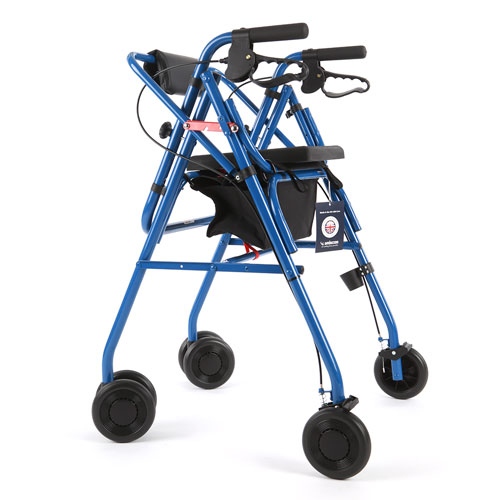
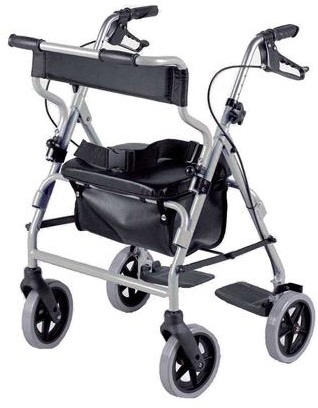
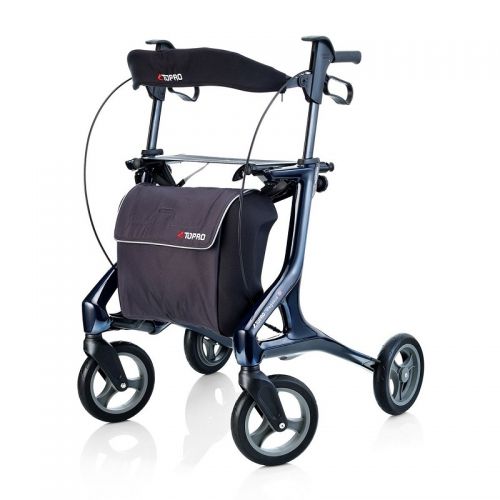
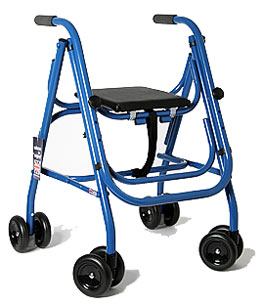
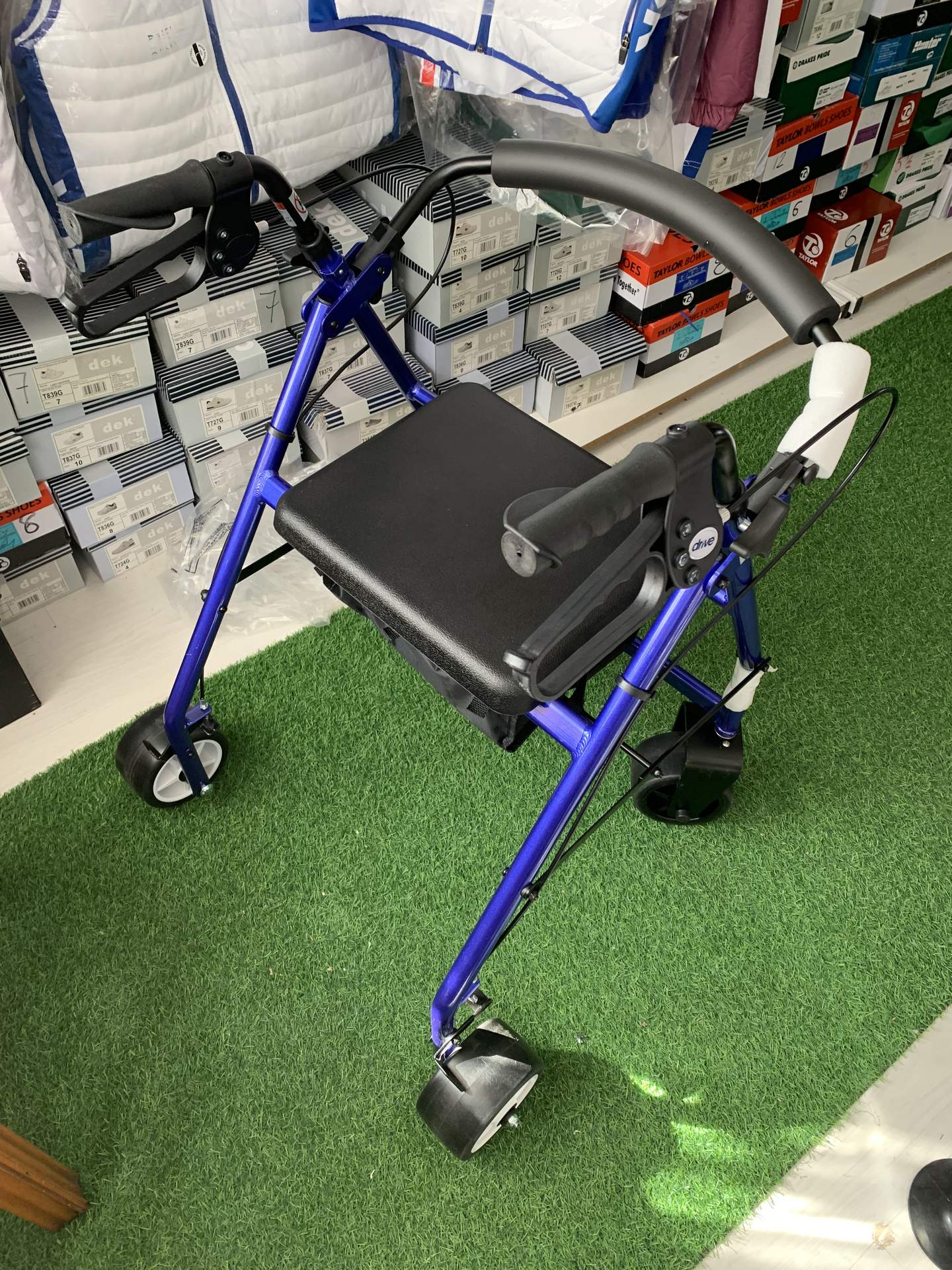
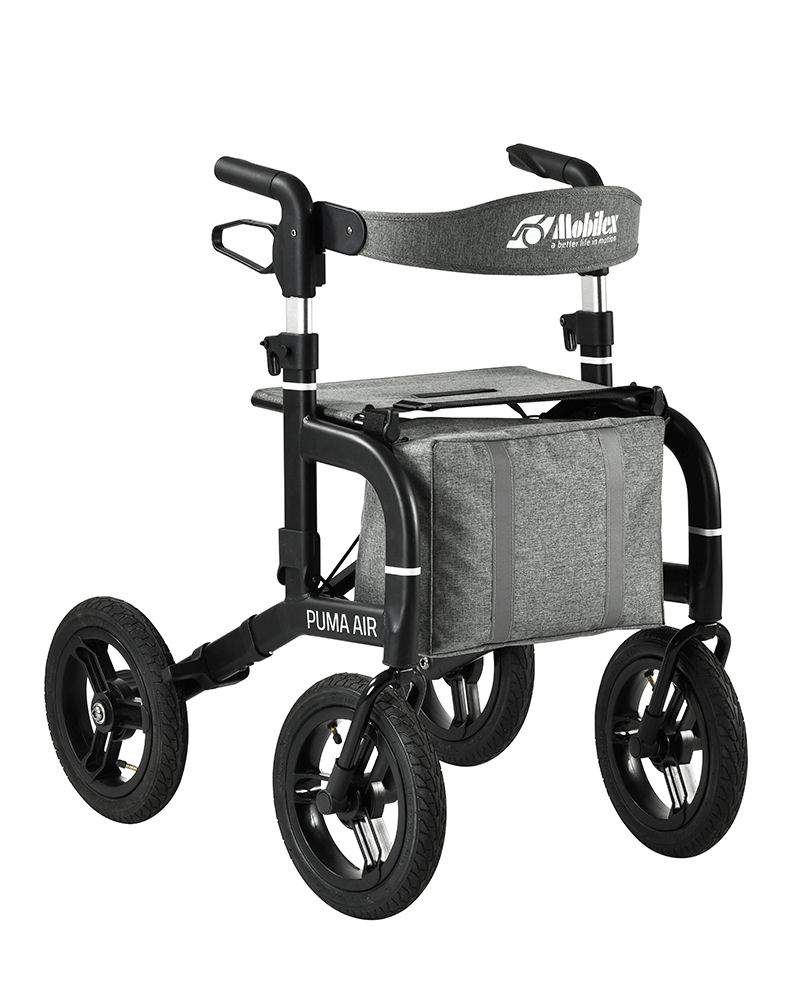
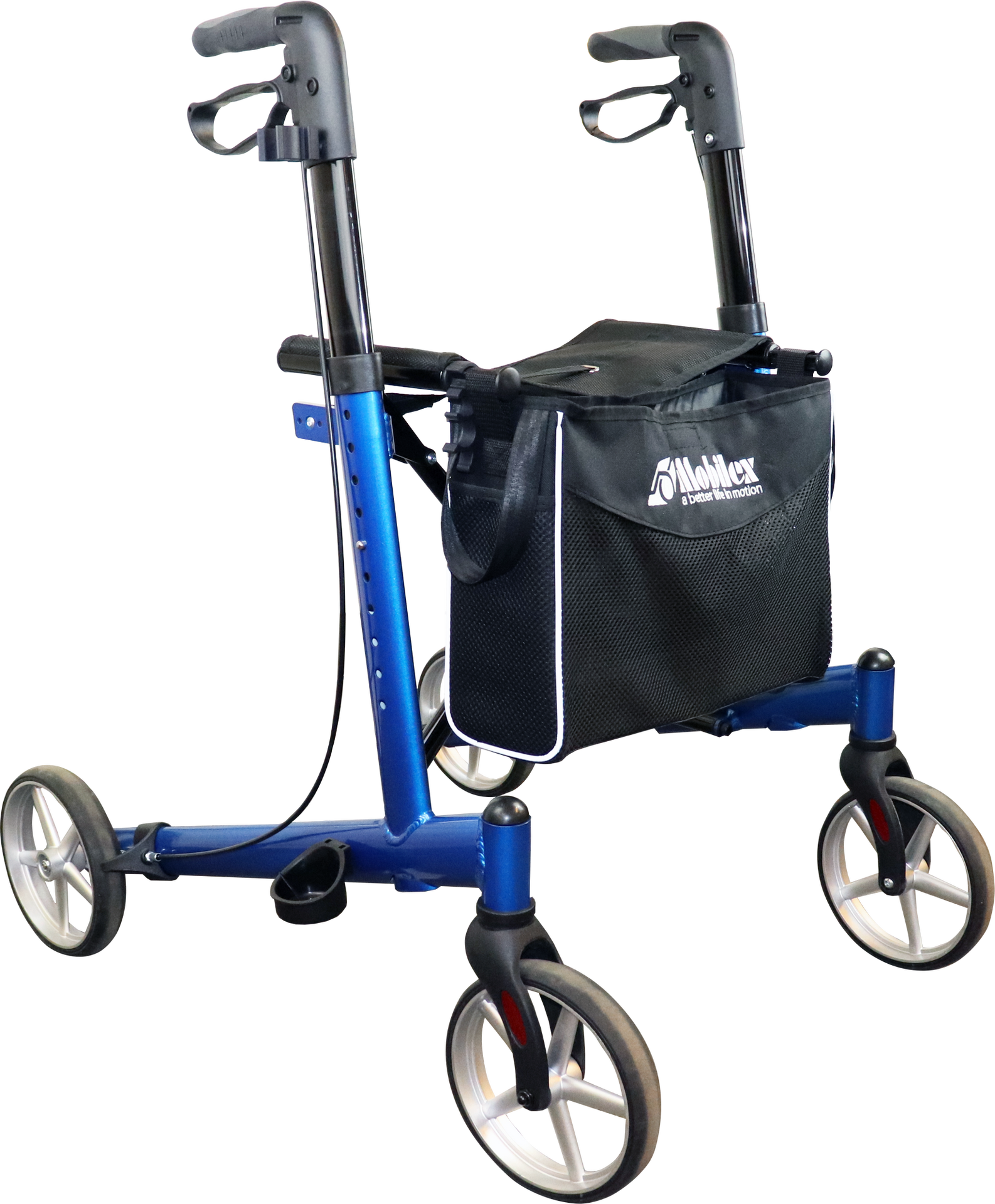
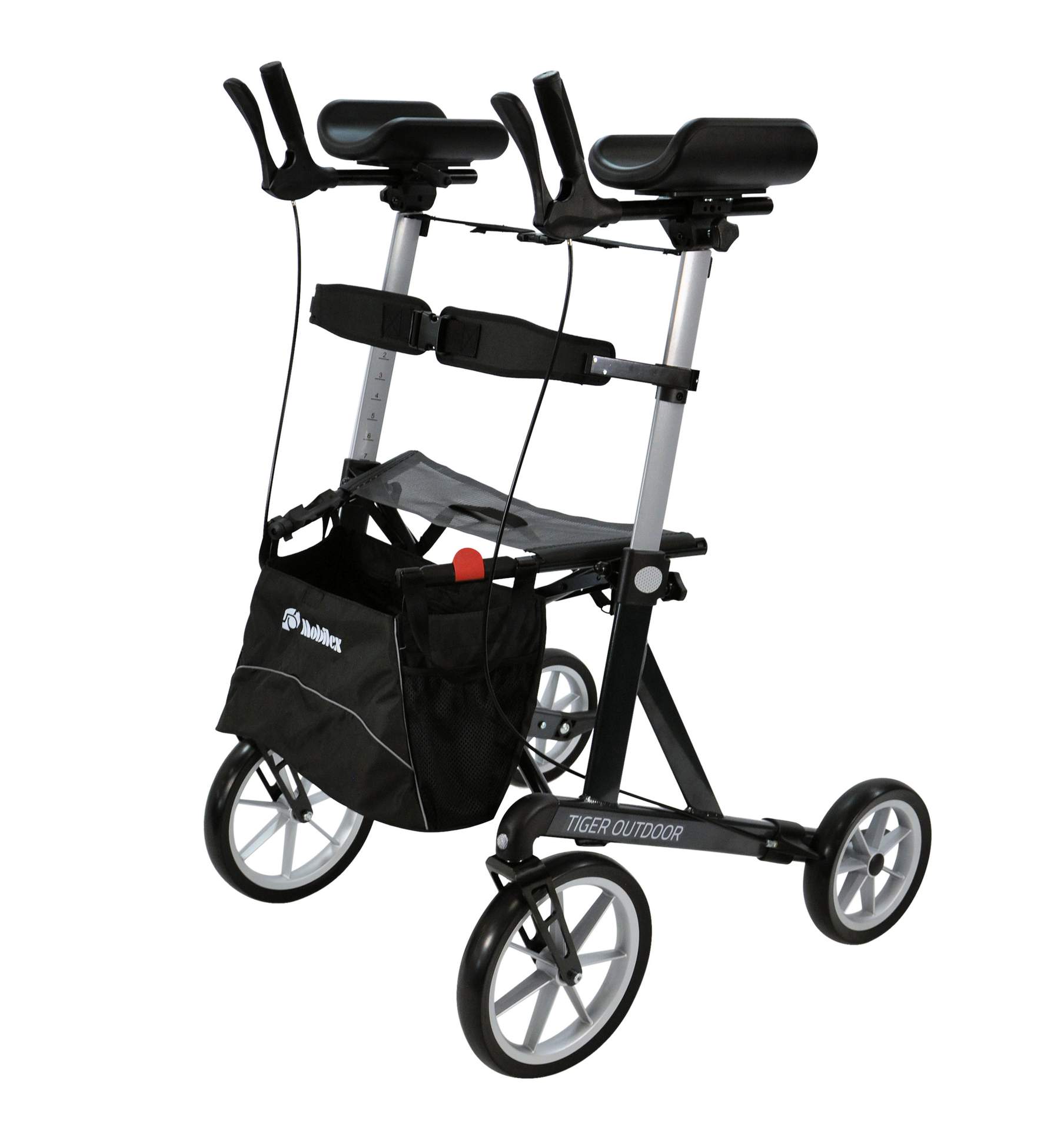
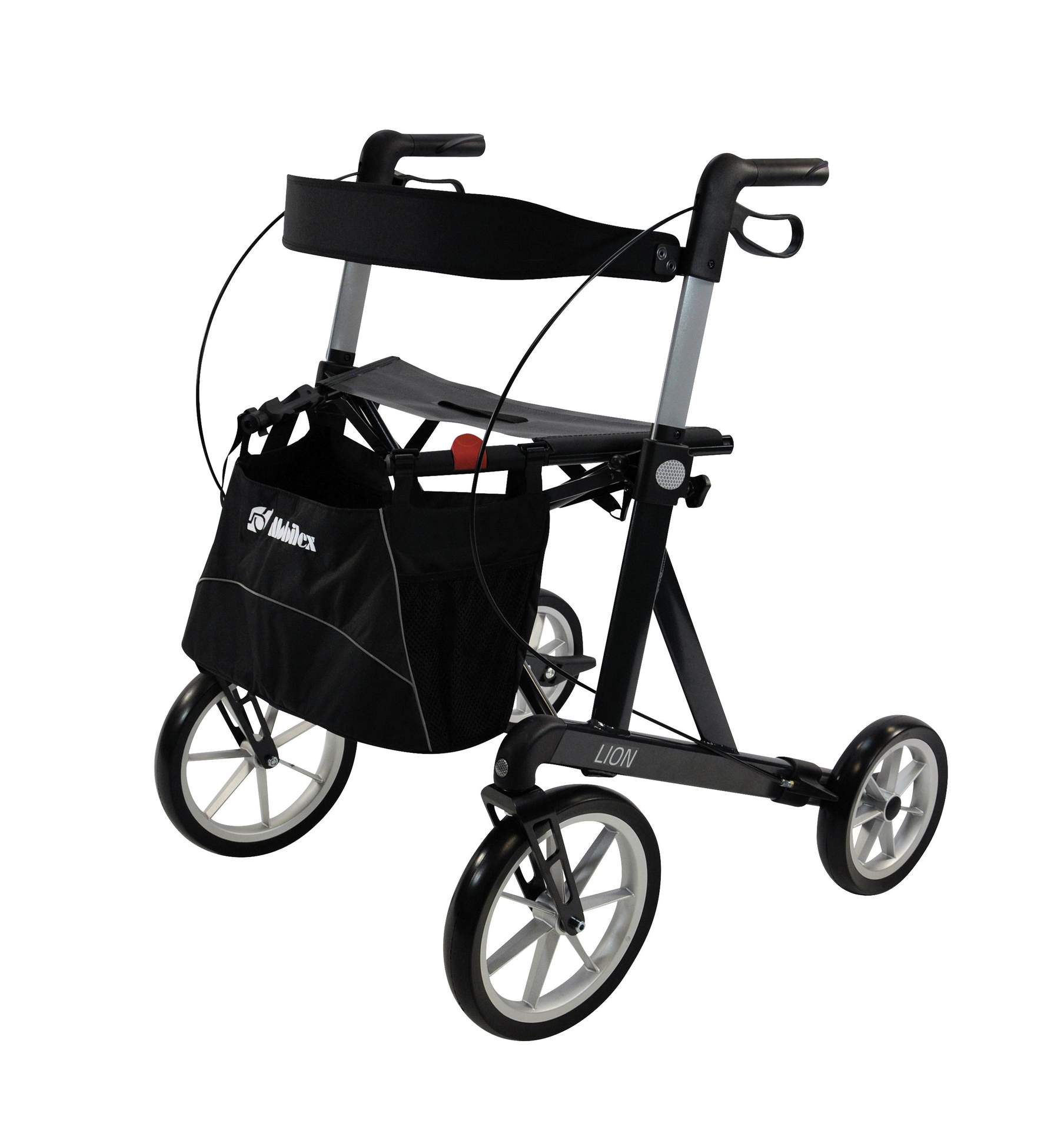
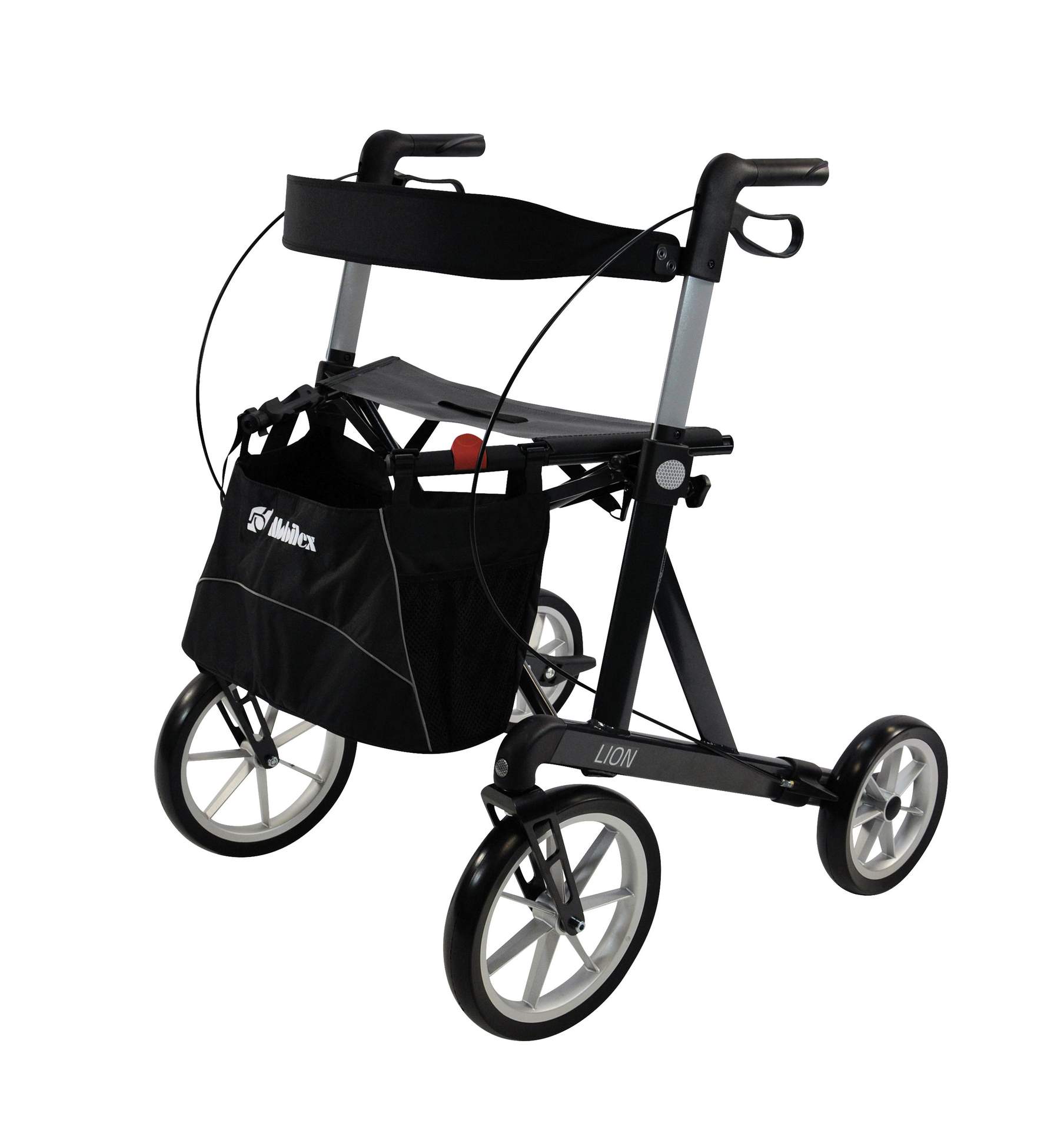
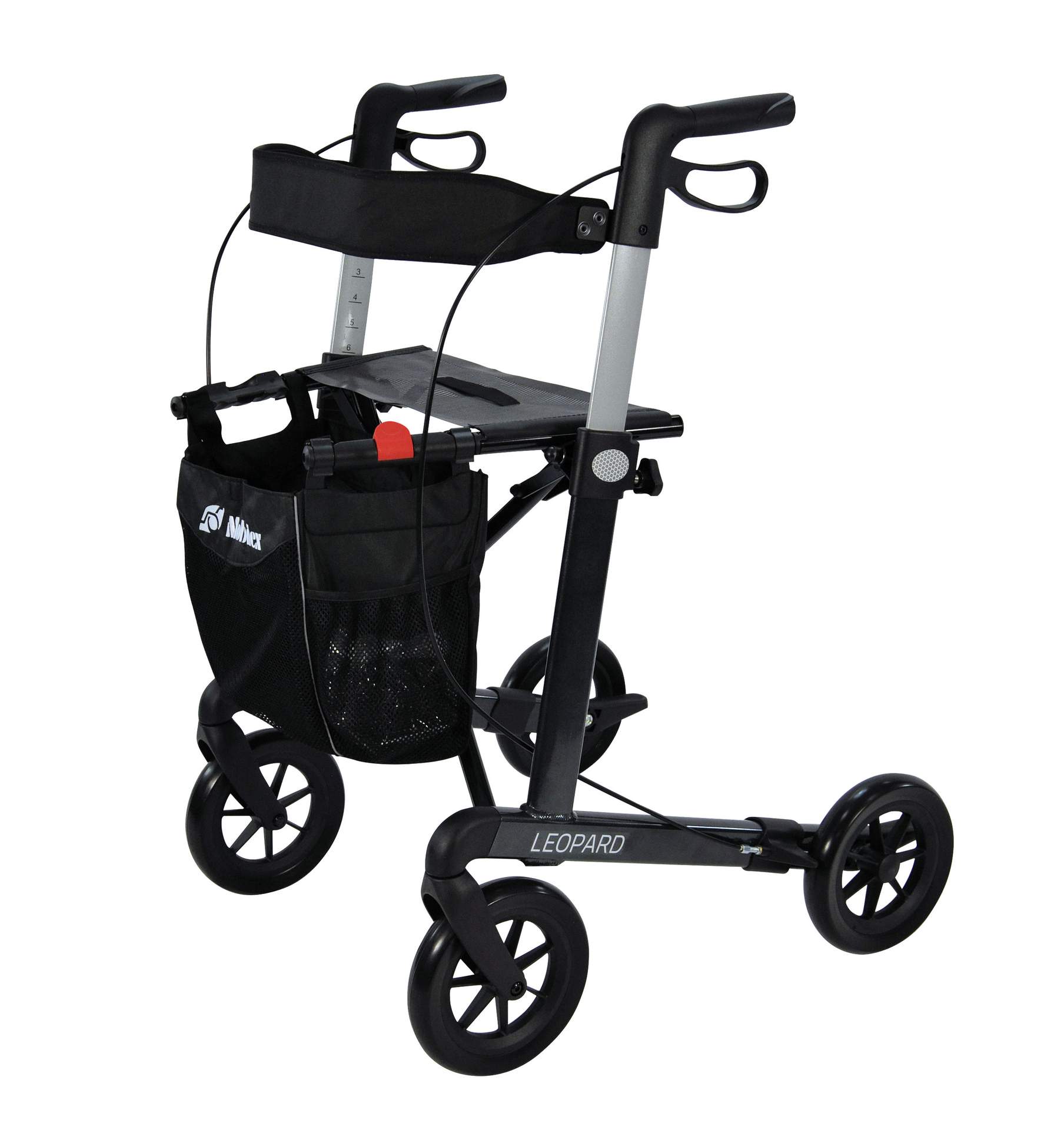
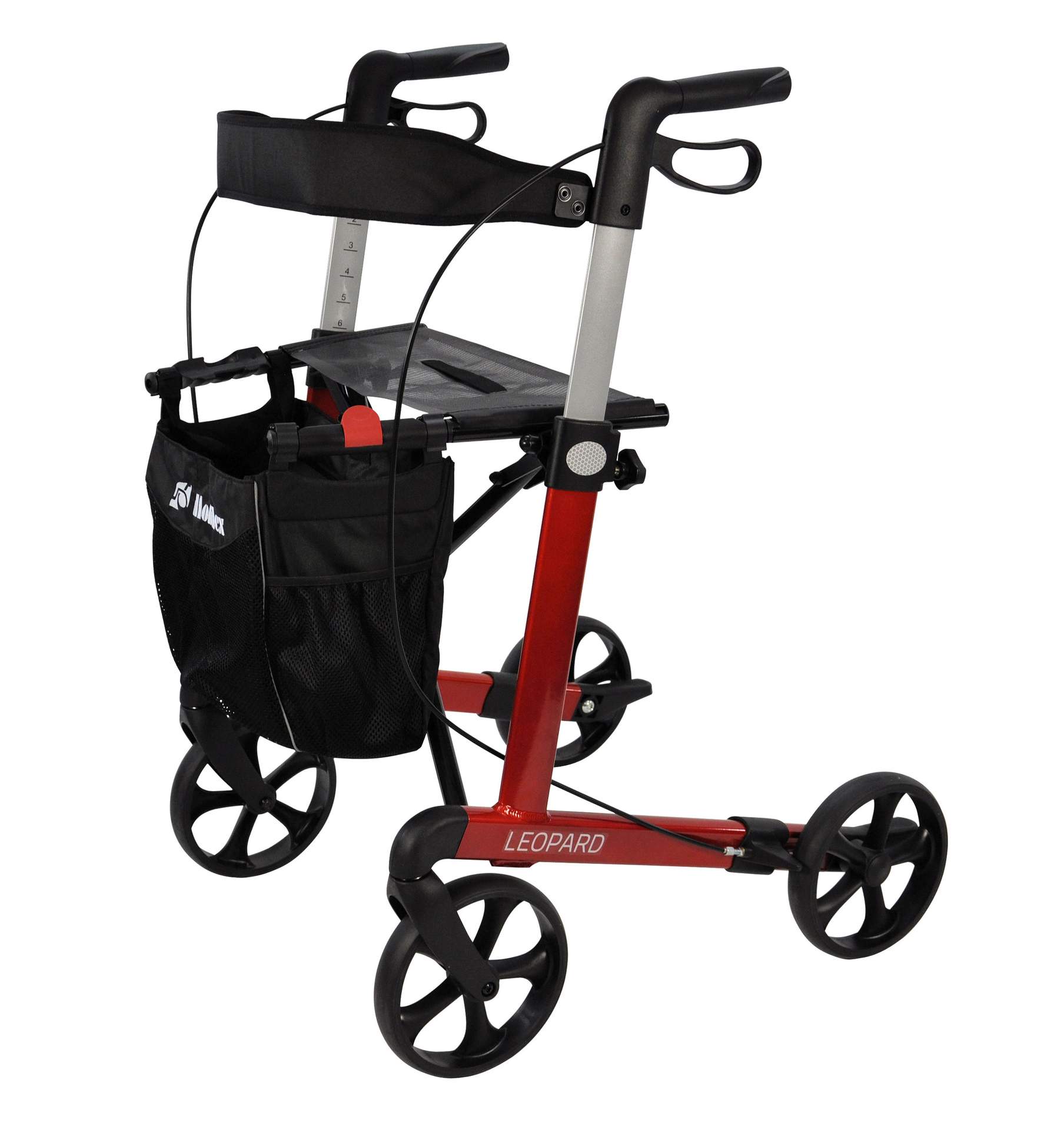
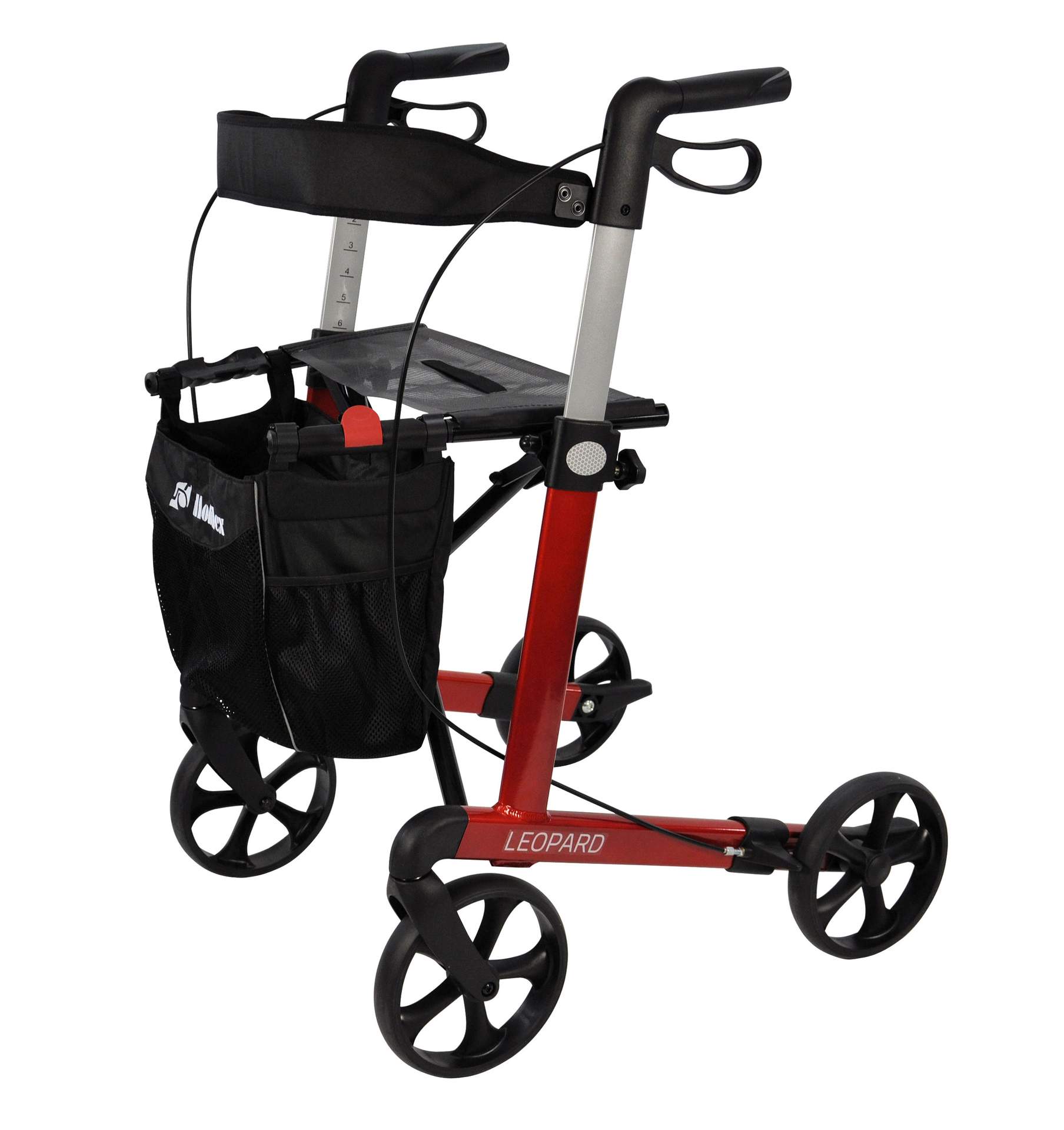
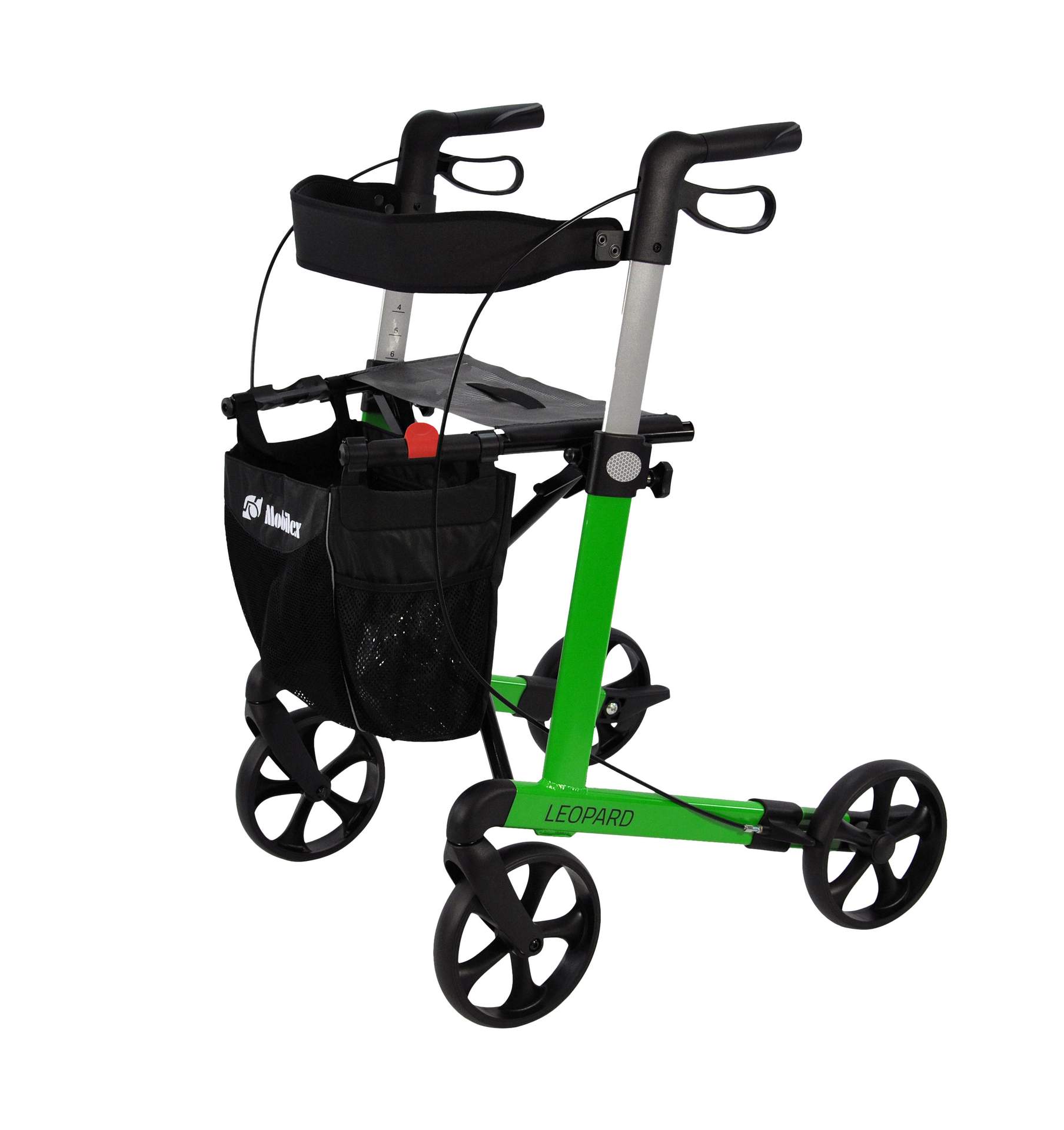
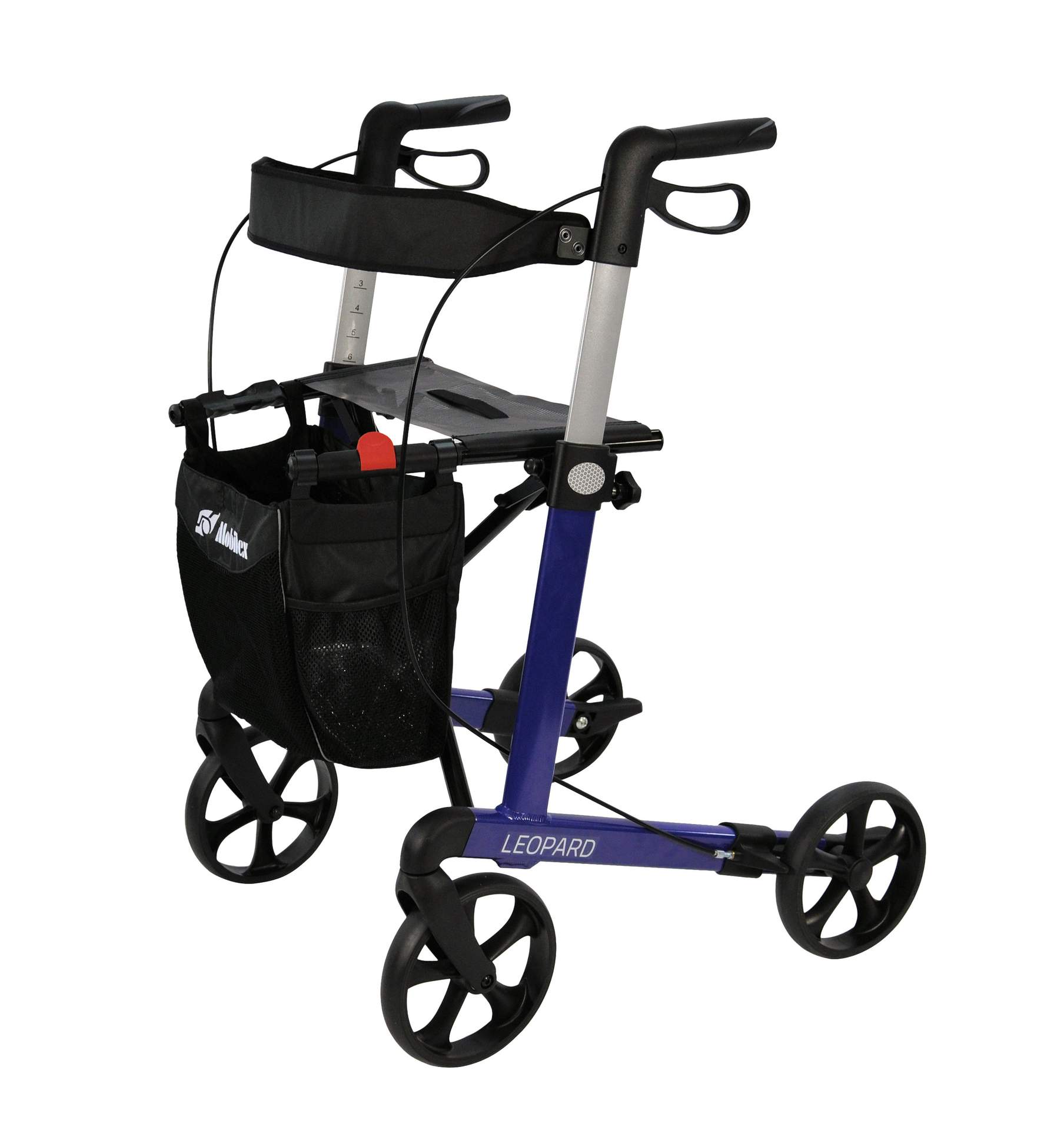
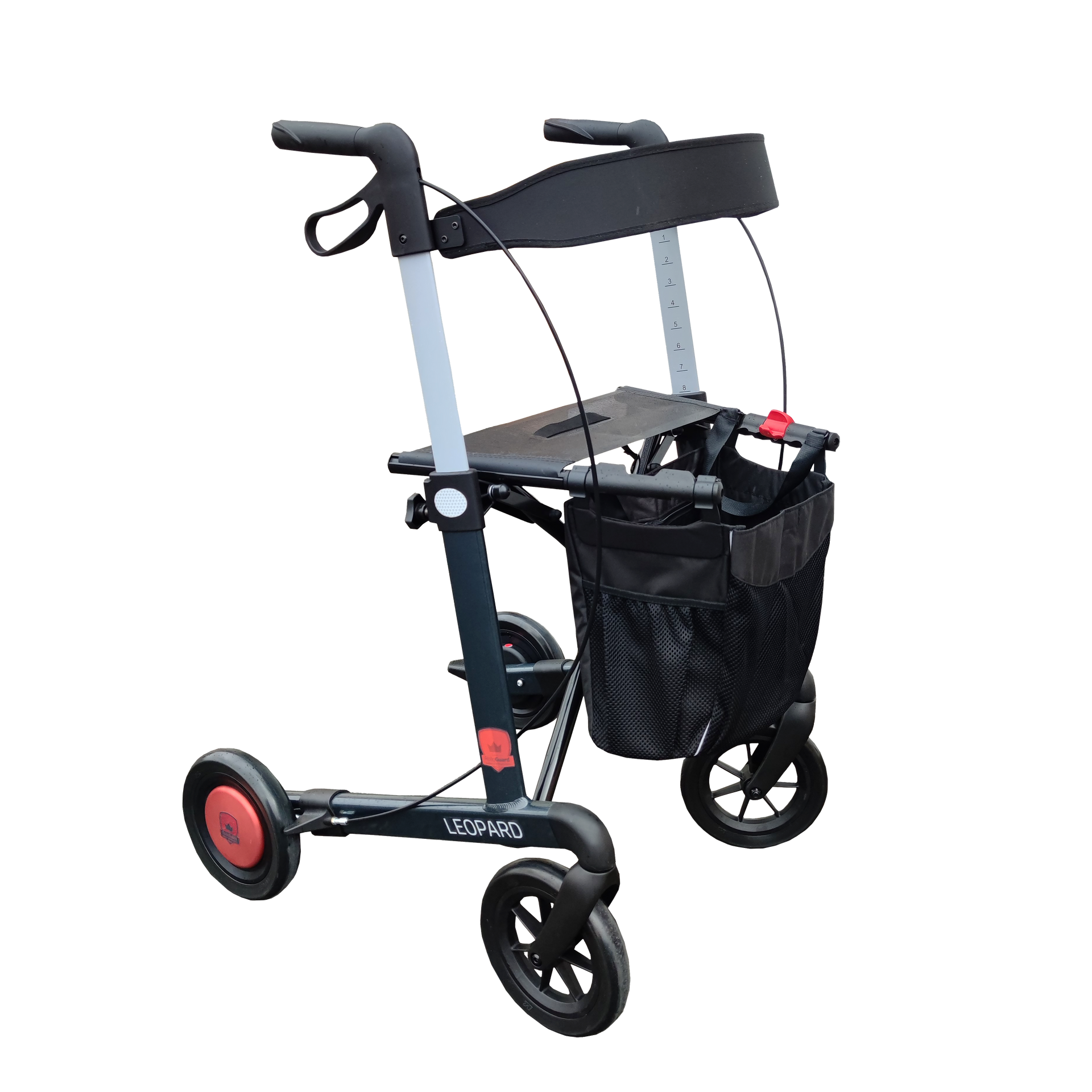
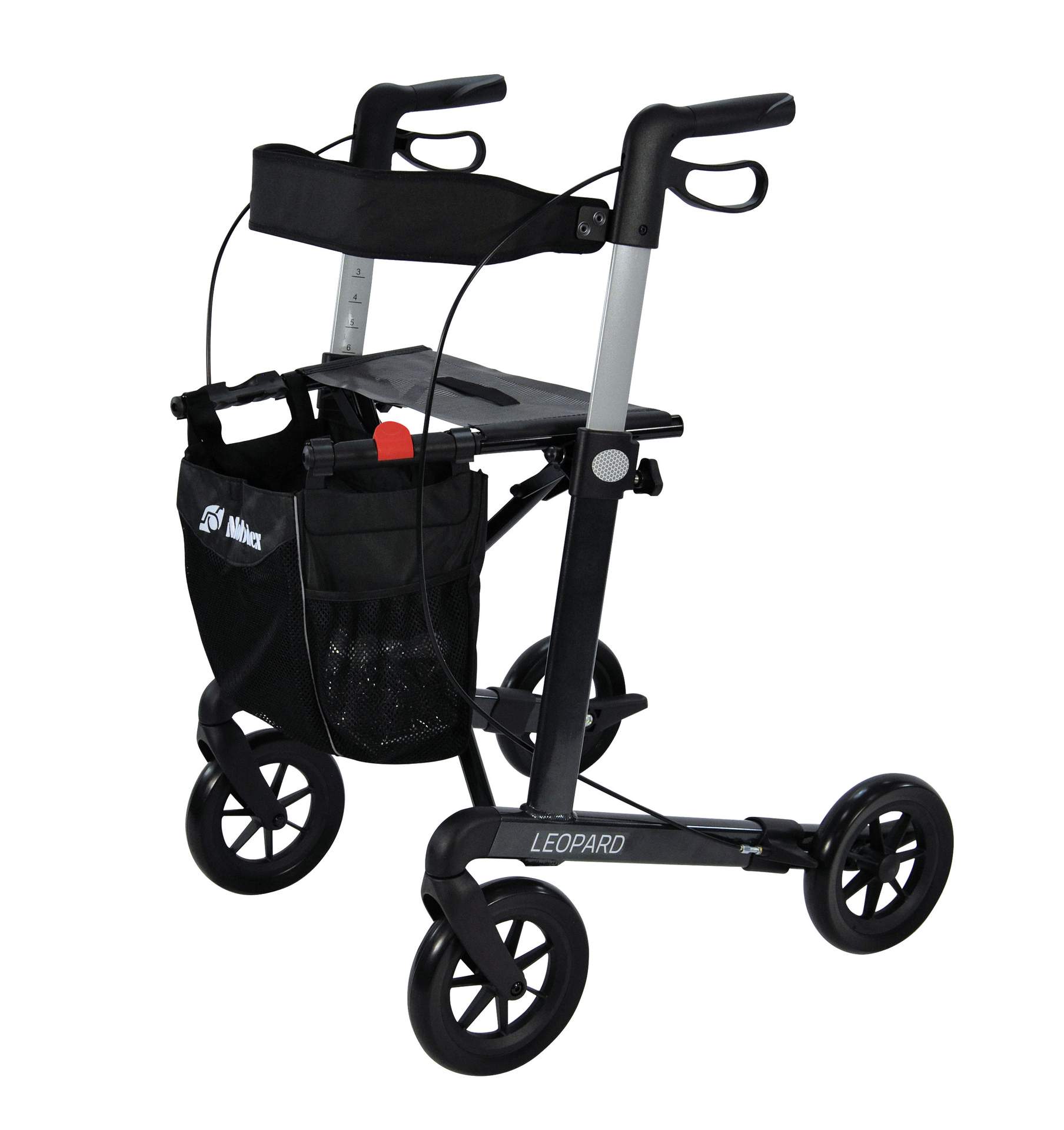
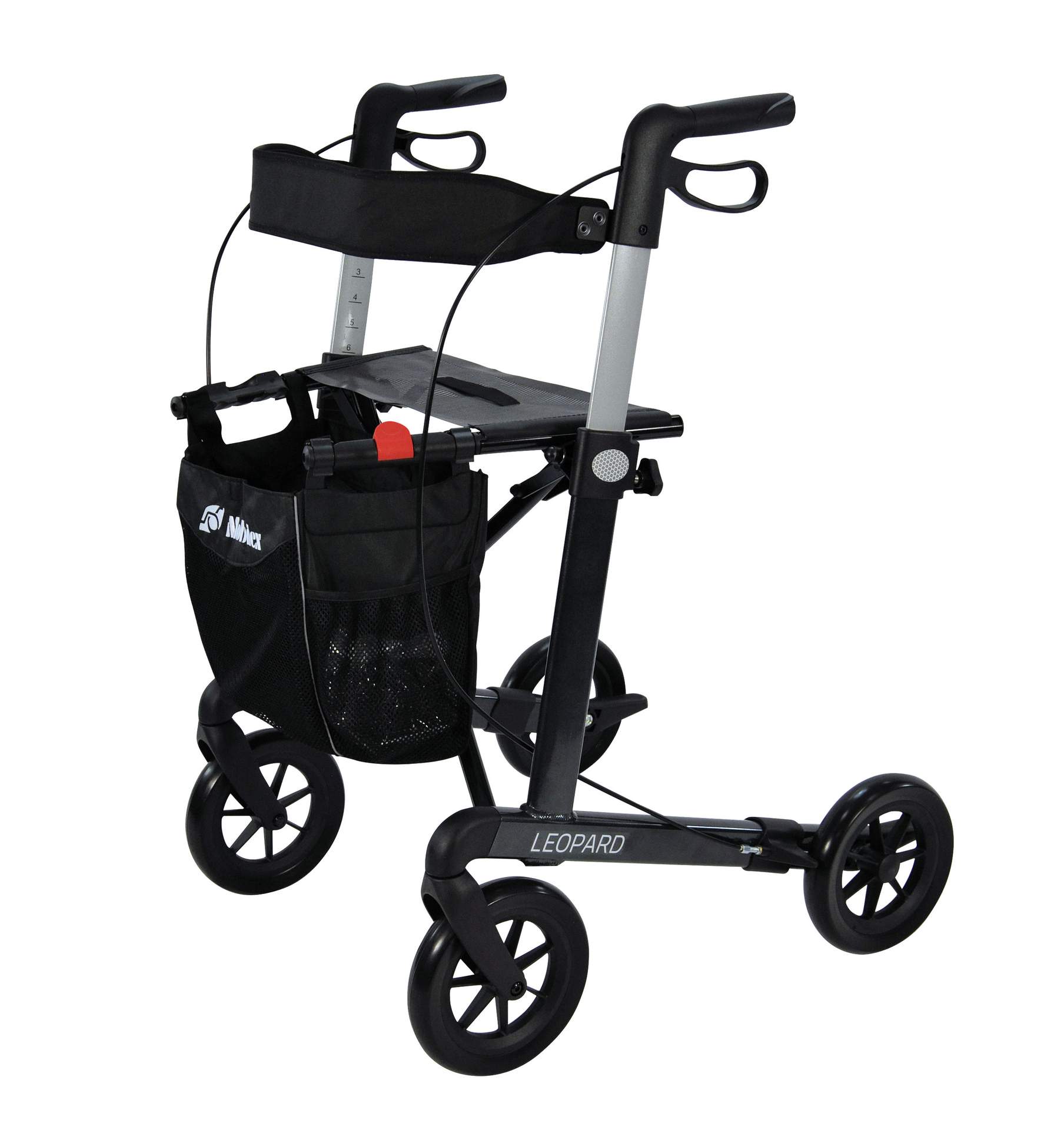
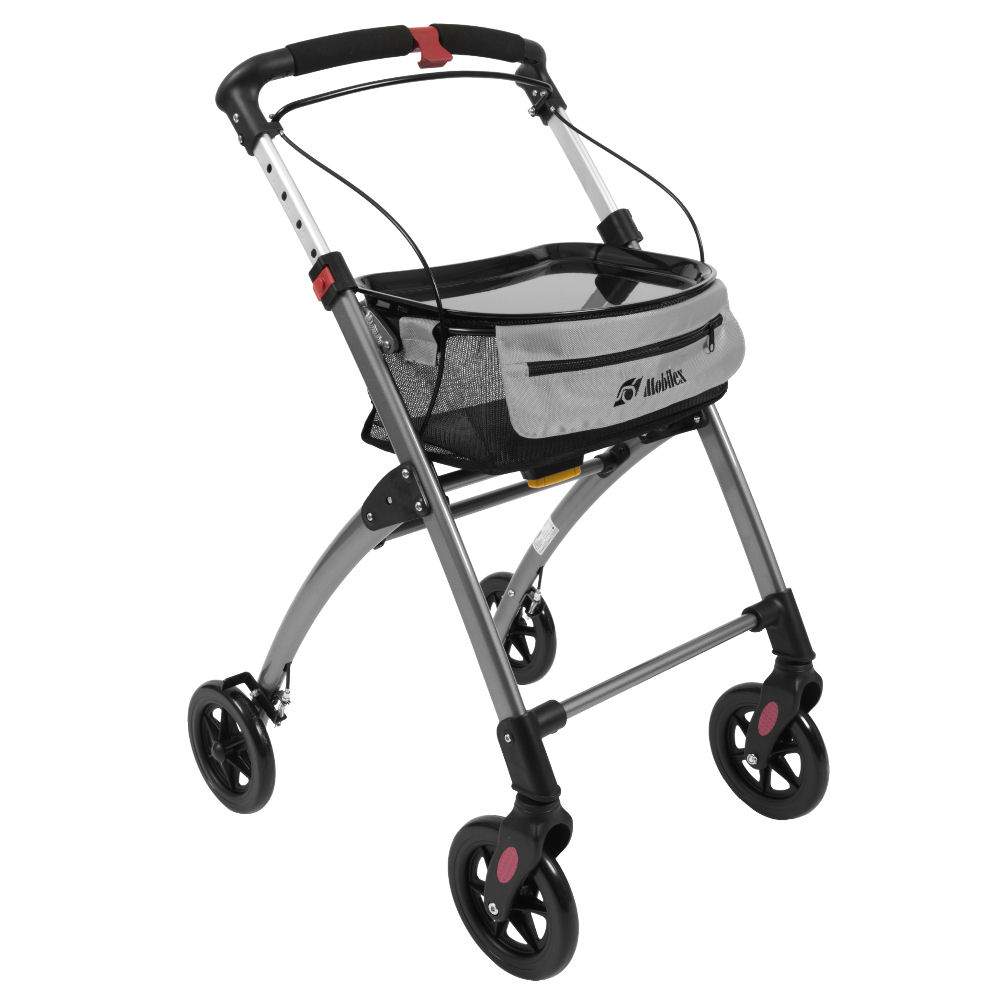
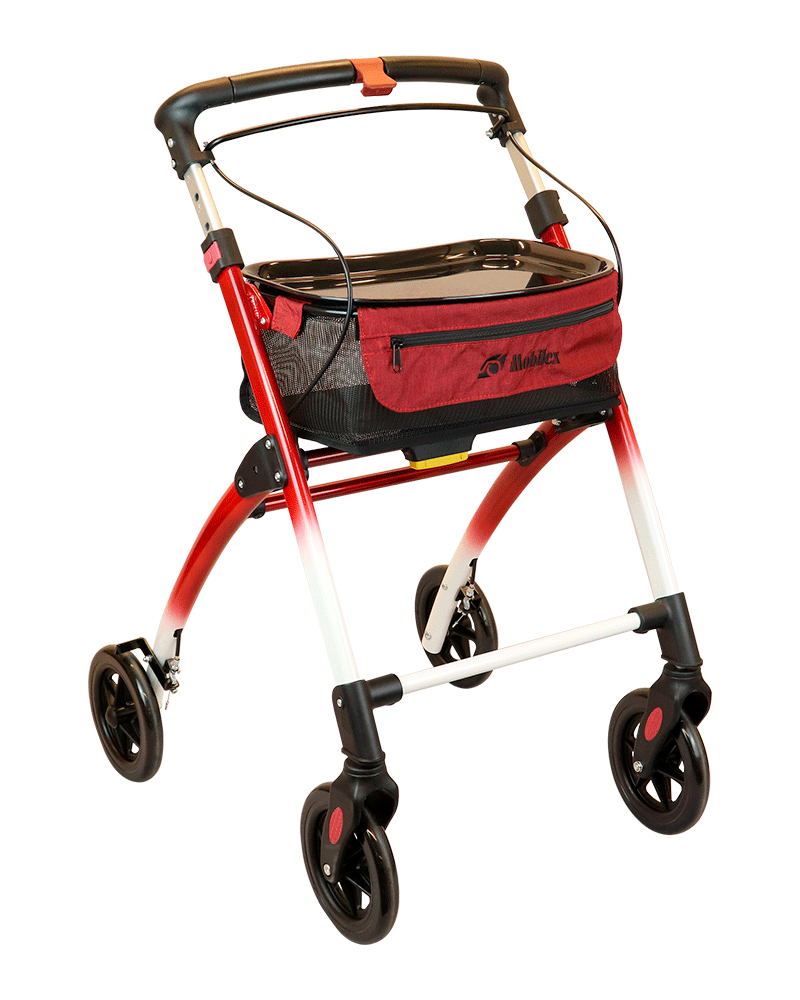
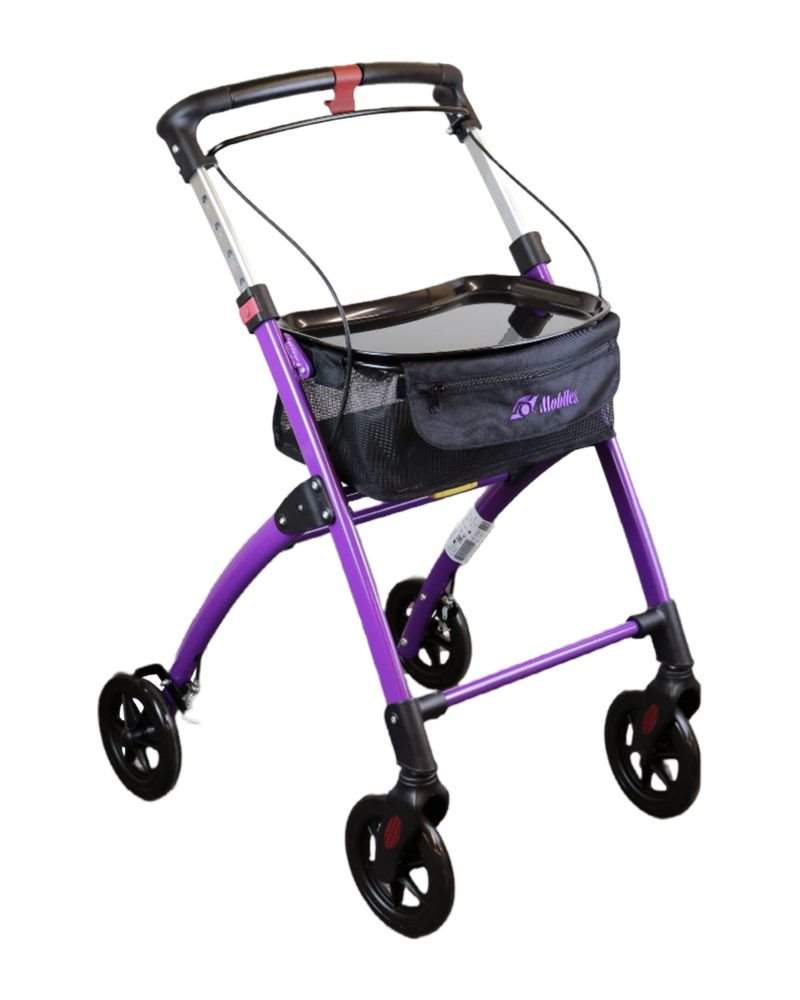
This section includes rollators and triangular walkers that provide support while walking. Some can be folded for storage and transportation, and most are adjustable in height. They may have pressure brakes which are operated by downward pressure on the frame, or cable brakes which require a squeeze action to operate them. Accessories, such as bags and baskets may be available.
Triangular walkers have a single front castor and two rear wheels.
Rollators with two front wheels and two rear ferrules are pushed by gliding them across the floor. They are less likely to run away than rollators with four wheels.
Rollators with four wheels have two castors at the front and two fixed-direction rear wheels.
Rollators for one-handed use are, or can be, fitted with a central hand grip that enables the rollator to be used with one hand. Care should be taken when using this equipment as they do not offer as much support as gripping the frame with both hands.
Introduction
If you feel insecure when you walk, experience weakness or pain, or have had a fall, then you may be considering getting a walking aid.
The purpose of walking equipment
Walking equipment is usually for one of two purposes: as part of a rehabilitation programme if you are recovering from an injury or operation, or as a long-term aid to mobility if you have ongoing difficulty with walking.
The rehabilitation process is a gradual progression towards independent and unassisted walking. It may start with the use of one kind of walking aid to give you confidence before progressing to another walking aid. The ultimate aim of a rehabilitation programme is for you to regain as much independence and safety as possible in your walking, preferably without walking equipment.
Sometimes complete recovery is not possible, or you may have an illness or disability that permanently affects your legs, balance or coordination. In these situations, mobility equipment may be required for long-term use.
To ensure that the appropriate device is selected, your needs, your lifestyle and your home environment should be assessed.
Walking equipment may perform one or more functions including:
- offer greater stability and balance by providing a wider support base
- aiding your walking pattern in terms of speed and evenness of stride. The equipment may also help maintain an upright body posture
- increasing your confidence in your walking ability
- weight redistribution. Some of the weight carried through the legs when walking is transferred through the arms of the frame or stick as it is leant on for support. This may help reduce pain in the back and the joints, muscles and ligaments in the lower limbs.
The safe use of walking equipment
The correct use of a walking aid is not always as straightforward as it seems. The ‘usual’ way of using an aid may need to be adapted to suit you and your particular condition or circumstances. If you, or the person you care for, have reduced cognitive functioning, it may also be more difficult to learn, or remember how to use a walking aid.
Walking equipment may improve your mobility but if an inappropriate walking device is used, if incorrect techniques are adopted, or if the device is not suitable for a particular environment, your independence and safety may be jeopardised. A physiotherapist or occupational therapist should be able to give you appropriate teaching and advice when you are assessed.
Reducing the risk of falls
There are a number of actions that you can take to minimise your risk of a fall whilst using a walking aid.
Home environment
Remove all loose rugs, trailing flexes and clutter from the floor. Keep your access routes around the house clear at all times
Stairs
If you have stairs in your house and use a walking aid, obtain a second one and keep one upstairs and one downstairs. Do NOT attempt to take a walking frame up and down stairs
Standing from a chair
Do not attempt to use a walking frame or stick to rise from a chair. They are not stable enough. You should push up with your hands on the arms of the chair and only take hold of the frame or stick once standing. If necessary ask to practise this with a healthcare professional.
Wet floors
Walking equipment should not be used in wet floor areas. If you need to access a wet room or shower area, ask the advice of an occupational therapist. You may be able to install grab rails.
Footwear
Footwear should be well fitted, secure on your feet and supportive as you walk.
Maintaining your walking aid
It is vital that your walking aid is kept in good condition.
Walking sticks, tripods and quadrupods
As traditional walking sticks only have a single point of contact with the floor they tend to be used by those with moderately reduced balance.
Types of walking stick
Wooden sticks
These traditionally have a crook handle and are cut to the correct height. They are available in various diameters and strengths which are designed to take different loads. They are not as adaptable as metal sticks.
Metal sticks
These tend to be stronger than wooden walking sticks. Some are fixed length, others are height adjustable. Metal sticks are available with right angled handles, crook shaped handles or anatomically shaped handgrips. The ferrules of metal sticks must incorporate a metal disc to prevent the end of the stick cutting into the rubber of the ferrule.
Folding sticks
These are lightweight metal sticks with sectioned shafts that enable them to be folded up for storage, for example in a handbag. Strong elastic runs inside the shaft to ensure that in its open position the stick remains stable.
Fixed height or adjustable height versions are available. Some are provided with a plastic, storage wallet.
Walking sticks with a seat
These are particularly useful for people who need to rest periodically - perhaps with breathing difficulties or a heart condition - or for people who find it difficult to stand whilst waiting in a queue. They are not recommended for people who need to take a lot of weight through the stick, as the addition of a seat alters the balance of the stick.
The weight of stick seats and the amount of strength needed to open and close the seat varies. The height of many of these sticks can be adjusted. It is important to ensure that the overall height is appropriate for the individual user so he/she gains walking support from it.
The seat size is often small and seat height varies between the models. The lower the seat, the more difficult it becomes to stand up. Most do not provide back support or armrests to push up from.
Those with three or four legs provide a broader base of support and are therefore more stable to sit on than the shooting stick type, which have only one leg. Seat sticks with a single point base must have a rubber ferrule. Traditional style shooting sticks with a single point and plate base, instead of a ferrule, do not provide sufficient stability.
The maximum user weight tolerated by stick seats varies according to their design. You are advised to check the manufacturer’s details for weight tolerance. It is also advisable to discuss the suitability if this type of stick with your GP or physiotherapist.
Walking sticks for blind or partially sighted users
White walking sticks are available as walking aids for those people who are blind, partially sighted or have difficulty mobilising. The white colour acts as an indicator to those around that the user is blind or partially sighted. White sticks with red stripes can be purchased for those who are both deaf and blind or alternatively, red tape can be wrapped around a white stick.
These walking sticks should not be confused with symbol canes which enable people who are blind or partially sighted to establish the nature of their immediate surroundings; or white guide canes which are used to locate obstacles in the path of the user.
Walking stick handle shapes
A variety of different shaped handles are available including:
Crook handles
These may be less comfortable to hold than a right-angled handle, but can easily be hooked over the arm when not in use.
Right angled or T-shaped handles
These are often more comfortable to use than a crook handle. The addition of a wrist strap may be useful to secure the stick when it is not in use.
Swan necked shafts
Handles with swan necked shafts (pictured) are offset above the stick, which allows your weight to be evenly spread centrally over the base of the stick - this may be helpful if you require more stability.
Contoured handles, sometimes called Fischer sticks
These are anatomically shaped handles which spread the pressure over a wider area of the palm to improve comfort for permanent users or those with painful hands, perhaps due to arthritis. They are produced for left or right handed use, so if you are self purchasing make sure you buy the correct one.
Tripods and quadrupods
These walking aids have a walking stick-style shaft and a three or four point base. They are therefore freestanding and are more stable than standard walking sticks. They are usually used singly rather than in pairs. If used in pairs, models with a narrow base occupy less floor space and are therefore more practical. They are more difficult to use on stairs than standard walking sticks.
All tripods and quadrupods are made of metal, usually aluminium or steel, and have a telescopic mechanism for adjusting height using spring-loaded catches. It is very important to have the tripod or quadrupod at the correct height for use.
As with other walking aids, the usual measurement to take is the distance between the wrist crease and the ground.
Tripods and quadrupods are available in narrow and wide based versions, the wide base offering greater stability. All can be used right or left-handed; the handgrip can be rotated through 180 degrees so that the spread of the base is away from the user.
Some quadrupods incorporate an extension above the handgrip that terminates in an elbow cuff, similar to the cuff found on elbow crutches. This gives added security, by retaining the forearm in a position immediately above the handgrip.
The correct height for walking sticks, tripods and quadupods
It is very important to have the walking stick at the correct height for use. If the height is incorrect then the support will not be adequate, or may cause discomfort. For example, if the walking stick is too high, this will result in you raising (elevating) your shoulders, therefore reducing your balance and comfort. Remember that these are general guidelines. There may be reasons why you require a different height, so check with a healthcare professional.
The most effective method of checking the height is to stand in your regular footwear with your arms hanging relaxed with a slight natural bend at the elbow (flexed at 15 degrees). Have someone measure the distance between the wrist crease and the ground. This should be the height of your walking aid.
Over time your height measurements and posture will change, so if it has been several years since you were provided with your stick, you should check that it is still a suitable height for you. Do not significantly change the height of a walking stick if you have had it for some time as you will have got used to it. If you need to change the height of a stick, perhaps because your overall height has reduced with increasing age, make a number of smaller changes over time. Please remember there may be a reason why a stick length was chosen, for example sometimes stick length is adjusted for individuals who have had a stroke.
Wooden sticks can be measured and cut with a saw to the correct height. In practice, when therapists are measuring wooden sticks, they turn the stick upside down and mark the point where the stick should be cut, keeping in mind the small addition to the overall height once a ferrule is attached.
Metal sticks are available in a variety of fixed heights - the nearest suitable height should be chosen. If they have a telescopic mechanism, this can be finely adjusted using the spring-loaded catches.
Crutches
You should always get advice from a healthcare professional before choosing or using crutches. Crutches are designed to be used in pairs and you need good co-ordination to use them correctly. Occasionally one crutch is used on its own, but this should only be done under the guidance of a physiotherapist.
Types of crutches
Elbow crutches
These are the most common type of crutch and may be single or double adjustable. Both floor-to-handgrip height and the distance between the cuff and the handgrip are adjustable on double adjustable elbow crutches. Single adjustable elbow crutches allow floor-to-handgrip height adjustment only. Standard and anatomically moulded handgrips are available.
Elbow crutches are available with two styles of cuff: open or closed. An open cuff is semi-circular in shape and provides a support to brace the forearm against in the step-through phase of walking. A closed cuff is an incomplete ring which prevents the forearm slipping forwards out of place and holds the crutch on the arm if, for example, you need to take your hand off the crutch to open a door.
Axilla or underarm crutches
These have a single or double shaft, the height and the distance between the handgrip and the axilla pad are adjustable.
If you are using axilla crutches, do not lean on the underarm pad as this may interrupt the blood flow and put pressure on important nerves that run through the armpit. The handgrips should be positioned so that the elbows are slightly flexed.
Forearm crutches with gutter armrest
These are designed for people who need to weight bear through the length of their forearm rather than their hand and wrist, for example those who experience pain in their hands. The height of these can be adjusted and they have a trough or gutter armrest that supports and spreads the user's weight through his/her forearms. The length and angle of the handgrip can also usually be adjusted.
Handgrip
Some crutches can have contoured handles, shaped to follow the contours of the hand and spreading the pressure over a wider area of the palm, for more comfortable use. A gel handgrip can also help to improve comfort.
Elbow crutches can be supplied with gutter armrests. These allow people to bear weight through their forearms rather than through their hands. They have padded, vinyl covered, trough-shaped supports with vertical handgrips. The length and angle of some handgrips can be adjusted to achieve the most comfortable position.
Material
Most crutches are made of metal, either aluminium or steel-reinforced aluminium for heavy-duty use. You may find some underarm crutches are still made of wood. Some metal crutches can have a coloured paint finish. All crutches must be fitted with an appropriate ferrule. The ferrules of metal crutches must incorporate a metal ring to prevent the base of the crutch cutting into the rubber of the ferrule.
The correct height for crutches
Crutches must be at the correct height for use. Both axilla and elbow crutches usually have two adjustment points.
The overall height of axilla crutches can be adjusted. This should be measured by standing upright in appropriate and supportive footwear. The underarm pad should fit under the armpit with two finger widths of space above to ensure no pressure is applied through the armpit when the crutches are being used.
The handgrip adjusts along the upright side of the crutches and should be set at a height level with the protruding bone at the side of the wrist.
The overall height of elbow crutches can be adjusted. This is measured by lining up the handgrips with the wrist bone. Some elbow crutches also have an adjustment for the elbow cuff, which should cradle the forearm just below the elbow joint so that movement of the elbow is not impeded.
Walking frames, wheeled walking frames and rollators
As walking frames have more points of contact with the floor they tend to be used by those with greater balance problems and/or weak legs. A walking stick can off-load 25% of the user’s weight compared to a frame which can transfer 64% of the user's weight through the arms. This weight re-distribution from legs to arms can also help reduce leg pain.
Types of walking frames
Non-wheeled standard pulpit frames (zimmer frames)
Standard walking or pulpit frames are commonly known as zimmer frames and are mostly used indoors. Zimmer frames have:
- metal frames made from aluminium or steel
- rubber ferrules on the bottom of their four legs which aim to prevent the frame from slipping
- moulded plastic or foam rubber handgrips. It is possible to get models with contoured handgrips, which enable the pressure exerted through the hands to be spread evenly over the palm
- fixed or adjustable height. Appropriate frames are available if you are particularly tall, short or of heavy build.
Although walking frames are useful because they provide a large area of support, they do not allow the user to walk using a flowing walking pattern. The user has to keep stopping and starting as the frame is picked up, moved forwards and stepped into. This means they may not be suitable for you if you get tired quickly or have difficulty starting movements (this is often a symptom of Parkinson's disease).
Consider the size of the frame base if it is going to be used in a domestic setting, as some may be too wide to go through small doorways. Frames with four legs that are spread widely apart will be the most stable but may be difficult to get through doorways. If the doorway is particularly narrow, the user may have to walk through sideways. Narrow four-legged frames are available, but are not as stable.
Folding pulpit frames
A folding frame can easily be stored within the home if it does not need to be used all the time. It also makes it easier to transport in a car boot. Folding frames with four legs have hinged sides, which can be folded flat against the front of the frame when catches are released.
There are a variety of catch mechanisms available to allow the frame to fold. You are advised to make sure you can operate the catch easily before you buy. It is suggested that some users often find it difficult to fold frames with press-button releases or levers.
Some pulpit shaped frames have a different folding mechanism. The frame is folded by pulling up a wooden ball, suspended between the top and bottom horizontal bars at the front of the frame, lifting the bottom bar upwards and closing the frame as it pivots at the point where the bottom bar meets the rear legs of the frame.
You may find this an easy mechanism to operate, but these frames are not as compact when folded as those with other folding mechanisms.
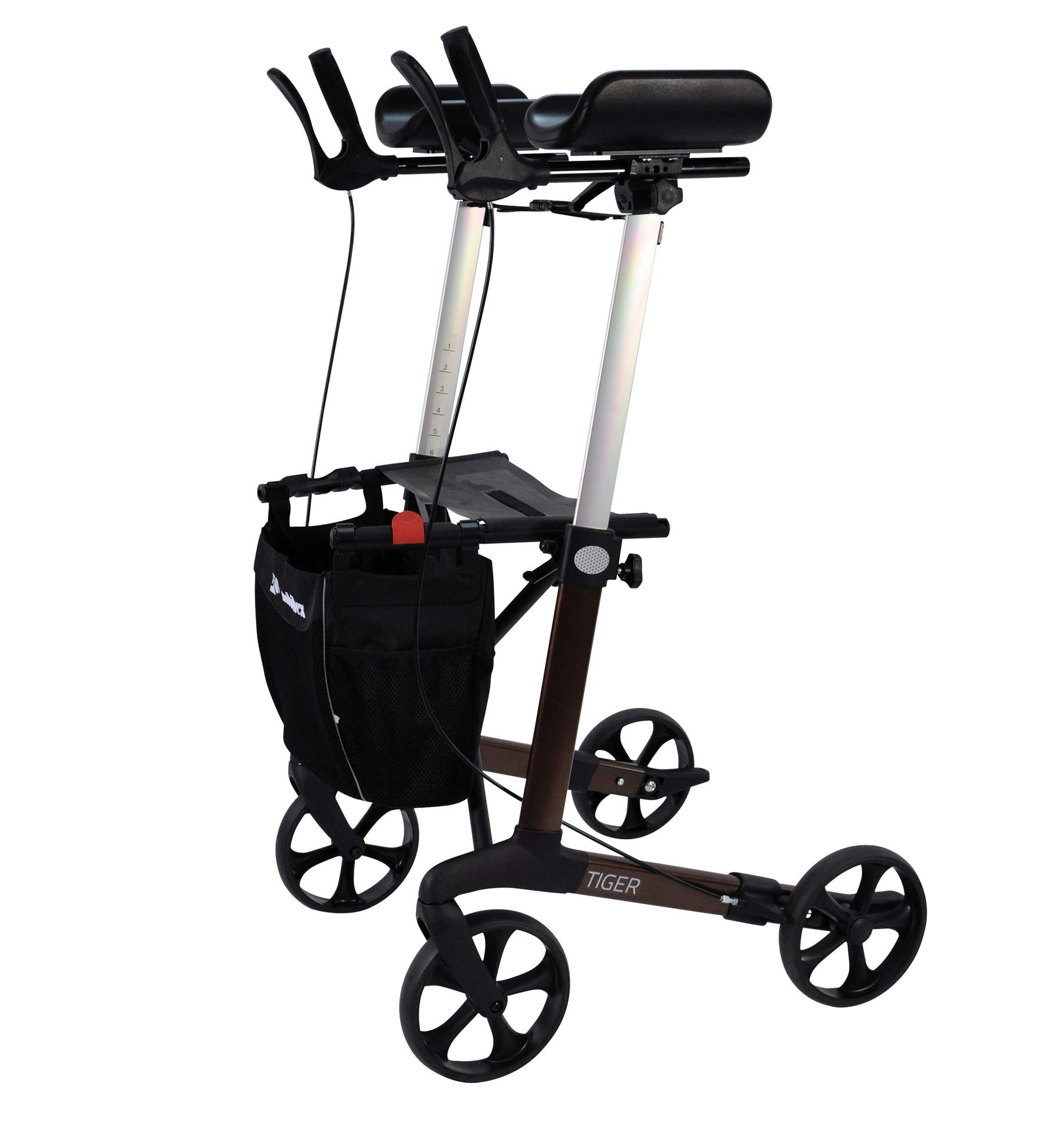
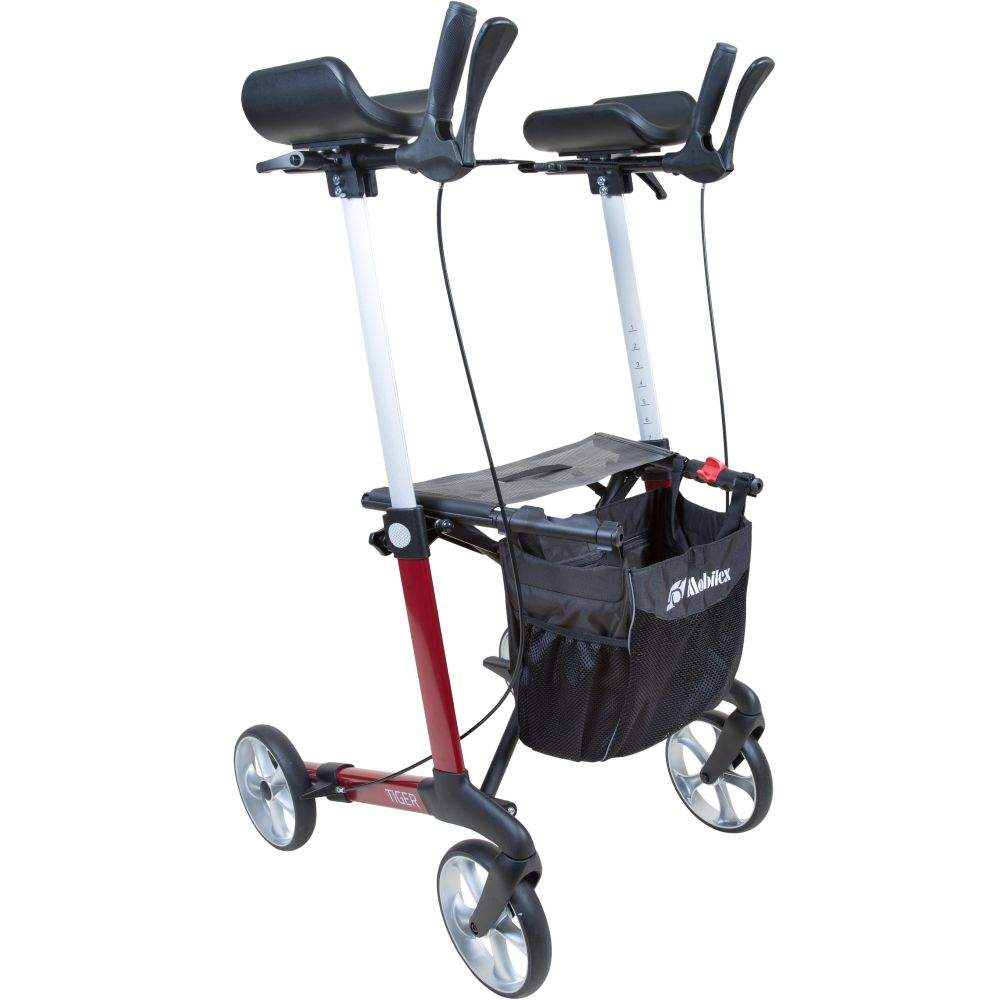
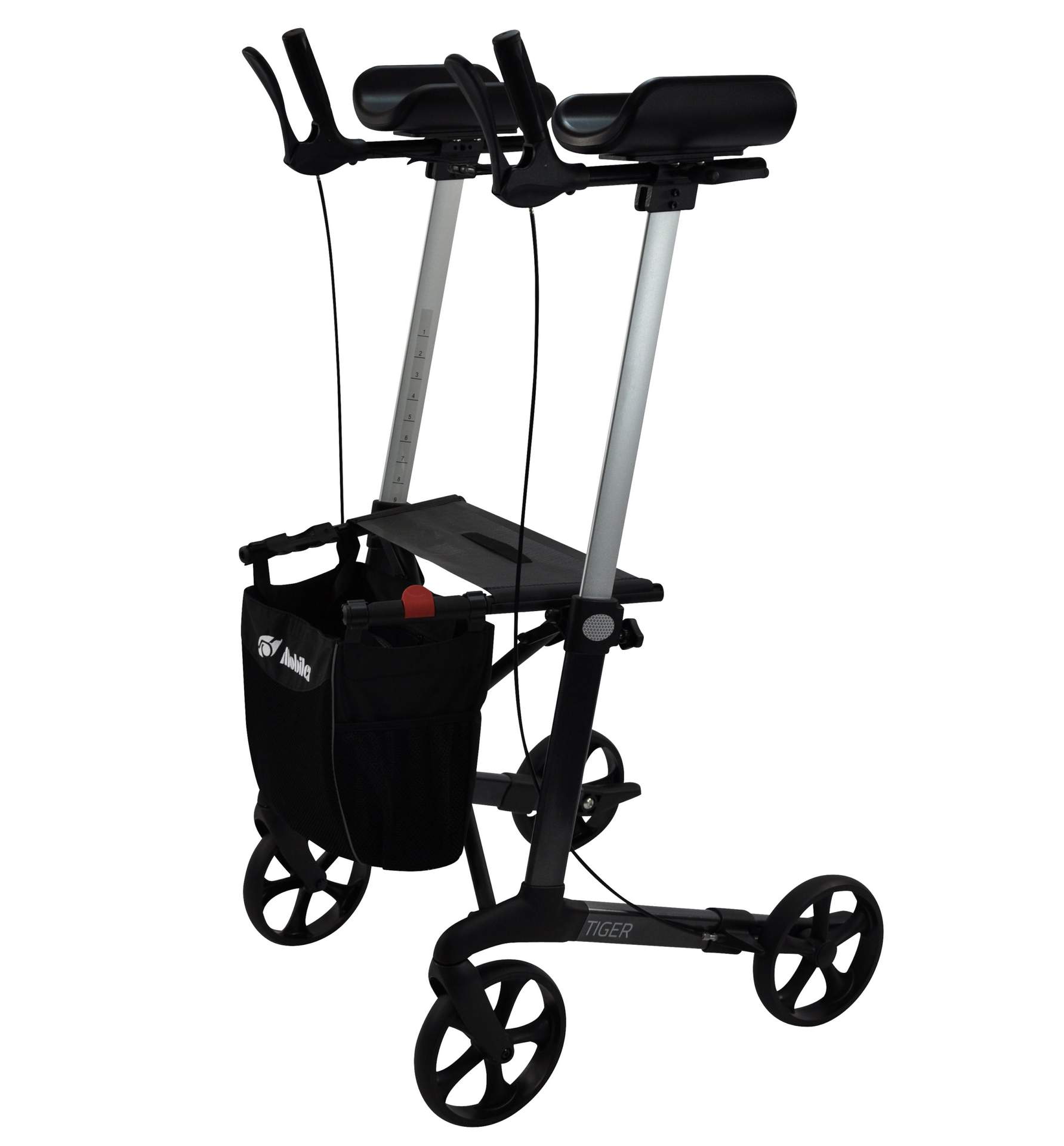
High or forearm walkers
These are also called 'gutter frames' and have forearm troughs or gutters which allow you to bear weight through your forearms rather than your hands. Thus gutter frames may be considered if you have arthritis in your hands or have broken your hand or wrist.
The troughs and handgrips can be adjusted to find the most suitable and comfortable position. Alternatively, some walkers have a platform rather than individual gutter rests on which to rest the forearms and a vertical handgrip.
High or forearm walkers may be wheeled or non-wheeled.
Reciprocal frames
These frames are hinged so that each side can be alternately placed forwards with each step to give a reciprocal action. They will go through tighter spaces than standard frames.
The advice of a physiotherapist should be sought when considering this equipment. Users often have difficulty learning to use reciprocal frames which makes them unpopular.
Wheeled walking frames and rollators
Frames with two wheels can be used in two ways:
- the frame is pushed with the rear ferrules lifted fractionally off the ground or they are allowed to glide across the floor surface, allowing the person to adopt a more fluent walking pattern
- alternatively, it is used like a non-mobile pulpit frame, except that the frame does not have to be lifted up to move it forwards - the person pushes it instead. This frame is held stationary while the user steps forwards.
Wheeled pulpit frames
Wheeled walking frames are basically the same as standard pulpit frames but instead of ferrules they have small wheels on the front legs. It may be possible to exchange the ferrules on a standard, non-mobile frame for wheeled extensions. The small wheels make them more suitable for indoor use but, as the wheels do not swivel, they can be difficult to manoeuvre.
Wheeled frames are usually chosen over non-wheeled frames when balance, instead of reduced weight-bearing ability, is the main concern. They are also useful for people who find it difficult to use a traditional frame as they make a more continuous walking pattern possible, and do not need to be lifted clear off the ground to move forwards. The wheels on these frames do not pivot around a corner, so the frame needs to be lifted when turning.
These frames should not be used for people who put significant weight through the frame, as the frame can unintentionally move forward with a pushing down/forward movement. They can also be hazardous to individuals with a Parkinsonian gait (characterised by small shuffling steps which accelerate) so consult with your healthcare professional.
Trainer walkers
This style of walking equipment offers the user additional postural support for gait training and rehabilitation.
Mobile frames for one-handed use
These frames have a central handgrip that enables the frame to be held/moved using one hand. Care should be taken if using a one-handed frame as it does not offer as much support as gripping the frame with both hands. Advice should be sought from a physiotherapist as using this sort of frame may have an adverse effect on some rehabilitation programmes.
Reverse mobile walkers
These are wheeled walkers in which you stand and face outwards. The cross rails of the walker are therefore behind you as you move forwards.
Three-wheeled rollators (Delta frames)
Triangular frames are sometimes called 'Delta' or 'tri-wheeler frames'. They have a single front swivel castor and two uni-directional rear wheels. The larger wheels make them suitable for use outdoors. You may find them more manoeuvrable than four wheeled walkers, although not as stable. As they are so manoeuvrable, the use of the brakes when the person stops walking is important for safety. Like two wheeled rollators they may allow you to adopt a more flowing walking pattern than a non-wheeled walking frame. The height of the pushing handles can be adjusted.
As with all mobility equipment, it is essential that triangular walkers are inspected regularly with particular attention paid to the locking mechanism (usually consisting of a cross brace), which maintains the rollator in an open position. If the folding mechanism is not properly locked the frame may fold unexpectedly.
Four-wheeled rollators
Four wheeled walkers, when used appropriately, will allow the person to adopt a more fluent walking pattern. Large wheels and/or large swivelling castors facilitate travel. However, they may be too mobile for people who need to lean or push against the frame for support - the frame may run away from them. The size of these walkers make them more suitable for outside use, but with adequate space, can be used inside.
Although many find their rollators very useful, some find them difficult to handle especially when out in the community, for example getting them on or off buses. Studies have suggested that users of rollators can walk faster and use less energy than users of zimmer frames.
The correct height for walking frames
It is very important to have the frame at the correct height for use.
- If the frame is too high, you may find it difficult to straighten your elbows sufficiently and may not take enough body weight through your arms
- If the frame is too low, it will encourage you to be bent over in a poor posture. However, a physiotherapist may deliberately set up a frame at a low height for people who tend to fall backwards - this will encourage them to lean forwards
- When being measured for the height of your walking frame wear appropriate and supportive footwear.
Generally, to ensure that the pushing handles are in the best position for weight bearing, the height of the handgrips should be at the level of the wrist bone when the user’s elbows are very slightly bent (at an angle of about 15 degree flexion). Some models are available in a number of fixed heights - the nearest suitable height should be chosen. Others have telescopic handles, with spring-loaded catches, so that their height can be more finely adjusted.
Features to consider when choosing a walking frame or rollator
Brakes on rollators
It is very important to ensure that a fully mobile frame has brakes and that they can be operated quickly and easily by the user, so that he/she always feels in control. These are the most common types:
- Pressure brakes These are operated by downward pressure on a spring-loaded frame. This causes the motion of the rear wheels to be interrupted when the user is leaning on the frame. However, they may not be suitable for users who cannot push down heavily enough on the frame or for heavier users who may apply the brakes permanently
- Cable brakes These are similar to bicycle brakes and require a squeeze action to apply them so they may not be suitable if you have weak or painful hands. Care should be taken when using the brakes as they instantly stop the frame. Users in some studies have found the brakes too stiff to operate or that they required too big a hand grip. Simultaneous use of both hands on each side of the frame is necessary. Cable brakes must be periodically checked and adjusted
- Locking brakes Many brake lever handles can be pushed down to lock the brakes in the on position so that the grip does not have to be continuously maintained. This safety feature is important when using a frame with a built-in seat
- Handgrips Most standard walking frames have either moulded plastic or foam rubber handgrips. However, someone with weak or painful hands or wrists will find it uncomfortable to push down on these. Alternatives are available. A few mobile frames are available with contoured, anatomically shaped handgrips which are designed to spread the weight over a wider area of the palm.
Weight
Heavy frames tend to be more stable, but may be difficult for some people to lift. Heavy frames can also cause shoulder and neck discomfort. Walking equipment designed for heavy duty use may be steel reinforced, adding to its weight.
Material
The majority of walking frames are made of aluminium. Some are made of steel which may be stronger for heavy duty use, but will weigh more. Some suppliers will offer a range of colours.
Wheels
Small solid wheels or castors are really only suitable for use indoors and may require more effort to push over deep pile carpet or carpet bars than larger wheels.
Pneumatic wheels will require pumping up from time to time, but provide more suspension than solid rubber tyres. If you have painful hands that may be aggravated by jarring you may find this an advantage.
Swivel vs fixed wheels or castors
Frames with castors that swivel may be more manoeuvrable, but fixed wheels can help to make it easier to walk in a straight line. Larger wheels are more suitable for uneven/outdoor terrain. Some studies have suggested that four wheeled walkers are more stable than three wheeled.
Seats
These enable you to take a rest if you becomes tired whilst walking. You apply the brakes, turn around and sits down. Some rollators have a small backrest for support when sat and armrests to help when sitting and standing. Check on the size and the height of the seat; some are very narrow, others are very low. A seat does increase the weight of the frame.
The rollator must have its brakes on before you sit on it, to ensure that the frame remains steady when sitting down and standing up. There is a risk that the brakes may fail to hold the wheels in place, or that the brakes may hold but the wheels may slide along the ground. Consequently many healthcare professionals tell users to park the rollator against a wall before applying the brakes and sitting down. If you are purchasing your own rollator, compare the stability of different models when sitting down on their seat with an experienced member of staff. Factors such as the rollators weight, the material of the wheels and how far the seat is from the braked wheels will all affect its stability when you are sitting.
Accessories for walking aids
Standard ferrules
The rubber tip of a walking aid is called the ferrule. It reduces the risk of the stick slipping on slippery or wet surfaces. On ice, metal tips give more grip. Ferrules must be replaced as soon as they show signs of excessive wear and tear. Different sizes are available to fit different diameters of shaft.
Replacements are usually available from the issuing authority if the walking aid has been loaned to you, otherwise contact the retail outlet that supplied your walking aid.
Pivoting ferrules
These have a large, swivel base, which enable the walking stick or crutches to maintain full contact with the ground when used at an angle or on uneven surfaces.
Shock absorbing ferrules
These incorporate a mechanism to absorb shock and may be particularly appropriate for people who are full-time users of crutches.
Ice ferrules
These have a metal spike which provides a firm grip on snow and ice. The spike can be flipped up and down when not needed.
Props and clips
It can be very annoying if your walking stick falls to the floor and you find it difficult to pick it up. Props can be clipped around walking sticks or crutches. Several styles are available but they are all designed to support a stick in an upright position against, for example a table edge. Alternatively U-shaped clips can be attached to wheelchairs or walking frames and are used to secure sticks or crutches when not in use.
Wrist loops
These can be attached to the top of a walking stick and the loop can be placed around the person's wrist to keep the stick at hand.
Comfort handgrips
These can be fitted over the top of standard walking sticks and crutches to make them more comfortable to hold. They may be made of fleece, foam, rubber, terry towelling or gel.
Bags, baskets and trays
A bag, basket or tray can be attached to some walking frames. Trays can be clipped onto the top of the frame and folded forward or detached when not in use. They are more useful on wheeled frames which do not need to be picked up to be moved.
Care should be taken when using accessories that attach to the front of a walking aid as they will alter the balance of the device and may make it less stable. Using specially designed net bags, apron style bags with pockets and wire baskets which have been designed to better maintain the balance of the walking aid is vital. Bags should not be attached to walking sticks or crutches. A shoulder bag worn diagonally across the shoulders may provide a solution to carrying less bulky items.
Walking stick holders hold a walking stick ready for use when it is not convenient to use the frame, for example in a tight space.
Household trolleys
Household trolleys are not walking aids, but if your main difficulty is carrying items such as meals and hot drinks between rooms, then you may wish to try out a household trolley in an equipment demonstration centre. Household trolleys are sometimes available through local authorities but depending on availability and eligibility criteria you may need to self purchase.
Household trolleys are designed for indoor use and their main advantage is that they enable items to be carried safely from room to room. You push them in front of you and should consider them as an aid to confidence rather than for transference of body weight. Some are height adjustable to an extent, but may not be suitable for a taller person. They are not suitable for outside use.
Features to consider
Material
Wooden trolleys have wooden frames with melamine shelves. Metal trolleys tend to have metal frames and plastic trays, they may be fixed or height adjustable. Height adjustment is via telescopic legs.
Shelves
Trolleys are available with one or two shelves; the bottom shelf is sometimes recessed to give greater space for your legs when stepping forwards. Some trolleys have removable trays which may help when transferring items or cleaning the tray.
Wheels
The size of wheel will affect how smoothly the trolley travels over carpets and thresholds. Generally, larger wheels cope better than smaller wheels over higher thresholds and thick pile carpets. Front fixed wheels facilitate travel in a straight line; swivel wheels improve manoeuvrability in tight spaces and around corners.
Shopping trolleys
Shopping trolleys are not walking aids, but if you are steady on your feet but lack walking stamina (for example a breathing difficulty or a heart condition, which may be made worse by carrying heavy loads) you may benefit from a shopping trolley that incorporates a seat. Some models fold so that they can be stored discreetly.
Assessing your needs
Difficulties in walking may be due to a variety of reasons including balance, movement and joint/skeletal problems. It is useful to understand the difficulties that you are experiencing, as it will influence the type of walking aid that is best for you.
If you are experiencing difficulties whilst walking, you feel insecure, or you have fallen, you are advised to see your GP initially. There may be an undiagnosed reason for your mobility problems. If there is, it is important that any illness, whether temporary or longer-term, is identified and treated where possible. Your GP will be able to refer you for a physiotherapy assessment if required, or you can organise a private assessment for yourself.
Physiotherapists are available in hospitals and community settings, through health and social services.
Walking aids for particular conditions
If you are experiencing walking difficulties because you have a particular condition, for example Parkinson’s, Motor Neurone Disease or Multiple Sclerosis, or you have had a stroke, you are advised to talk to your physiotherapist. Sometimes the use of a walking aid may only be recommended at a certain stage of the condition, or with a particular method of use. The contact details for various organisations is given at the end of this factsheet.
If you have a condition which affects your hands, and thereby your grip, you will need to consider the type of handles on the walking aids. There are some designs which may be better for you.
Supply and provision
Following an assessment, the physiotherapist may provide you with advice about techniques, exercises and/or footwear, rather than a walking aid. If a walking aid is required, they will usually provide you with one, or you may be advised on equipment to purchase yourself.
Things to consider when obtaining a walking aid
It is vital that you obtain the right walking aid for you and your circumstances. You also need to know how to use the walking aid properly and safely. A physiotherapist can ensure that this happens. There are some key factors that need to be considered:
- Your body frame, e.g. your height, shape and weight. If you are a particularly large, tall or short person, you will need to ensure that the equipment you choose is suitable for your weight and height
- Your condition and the way that it affects you, e.g. does your condition give you pain or do you get very tired?
- Your gait - the manner in which you walk. How is your balance, your strength and ability to weight-bear?
- How will your condition and its effects change over time?
- Does your condition affect your hands and your ability to grip?
- What activities do you want or need to be able to do, e.g. are you working or based at home?
- The environments that you spend most time in - your home, college, work or social setting. Do you need to manage the stairs or access a small bathroom/toilet?
- Will you need to carry the walking aid in the car or take it on public transport?
As with any repeated movement pattern, the long-term use of a walking aid can cause changes in your gait, posture, balance and muscle strength. These can all affect your ability to carry out certain tasks. It is important that:
- you are given the correct walking aid for you
- it is adjusted to the correct height for you
- you are taught its correct use
- you also know how to counteract any possible long-term change it may make to your body, for example exercises and your positioning when at rest.
It is a good idea to have a second walking aid, for example if you want one to keep at the home of a friend or relative, or keep one upstairs and one downstairs at home. You can safely purchase a second walking aid with the same features as one with which you have already been provided, without the advice of a professional.
Private physiotherapist
If you wish to request a private appointment with a physiotherapist, you can search an online registry held by the Chartered Society of Physiotherapists.
Physio First represents the interests of self-employed private physiotherapists. You can also search for a private physio via Physio First's website.
If you do contact a private physiotherapist (or occupational therapist) make sure they are registered with the Health and Care Professions Council (HCPC). The HCPC is responsible for the conduct, performance and ethical behaviour of its registrants and any occupational therapist or physiotherapist must be registered with them in order to practise. Visit the HCPC website to check the registration status of a physiotherapist.
Private purchase
If you decide to buy equipment privately it is best to try and compare the different ranges of walking aids first. You may have an equipment demonstration centre near you that you can visit, where you will receive impartial advice to help choose appropriately. If you know what you need in terms of your condition and your mobility, do also consider the practical aspects of your environment/s, storage, transport etc.
Look for retailers who are members of the British Healthcare Trades Association (BHTA), which means that they adhere to the organisation’s code of practice.
Funding sources
Charitable trusts may sometimes provide funding for equipment. Charities will only give awards in accordance with a predetermined criteria, so it is important that you carefully select the trusts you apply to.
The Grants for Individuals website is run by the Directory of Social Change and lets subscribers search for grants. It is intended for organisations searching for funding for individuals.
VAT relief
If you are disabled, terminally ill, or have a diagnosed long term condition, you may be able to claim VAT relief on the purchases, thus reducing the cost. Ask the supplying company or check their website for further information.
Maintaining your walking equipment
All walking equipment should be checked regularly for signs of wear and tear. Particularly vulnerable parts include the ferrules, which are the rubber cap placed on the end of the walking stick or frame to provide grip and stability on the floor surface. The ferrules must be replaced if the slip-resistant rings or bobbles on their underside lose their definition, or if the rubber shows signs of cracking. Replacement ferrules are usually available from the issuing department, for example the hospital physiotherapy department. Some high street chemists stock them and they are widely available online. You will need to measure the diameter of the ‘leg’ of your walking aid to ensure that you get the correct size of ferrule.
Equipment that is height adjustable can show signs of stress at the height setting after prolonged use. Handgrips can also become worn. Although certain handgrips can be replaced, they are less easy to obtain. It may be easier to replace the whole walking aid.
If you feel that your walking device is structurally no longer safe to use, inform the issuing department which may provide you with a replacement. If you have bought your walking device privately, then you are responsible for maintenance and upkeep.


 back to top