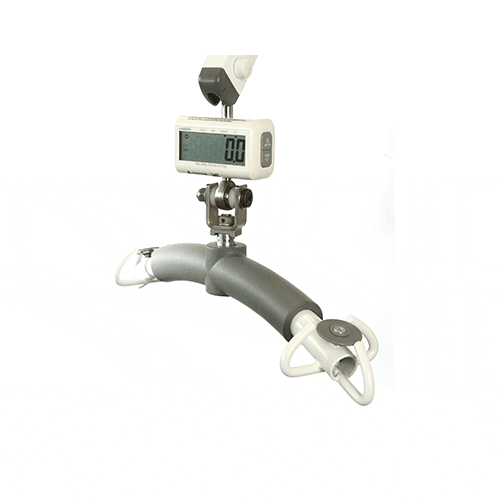
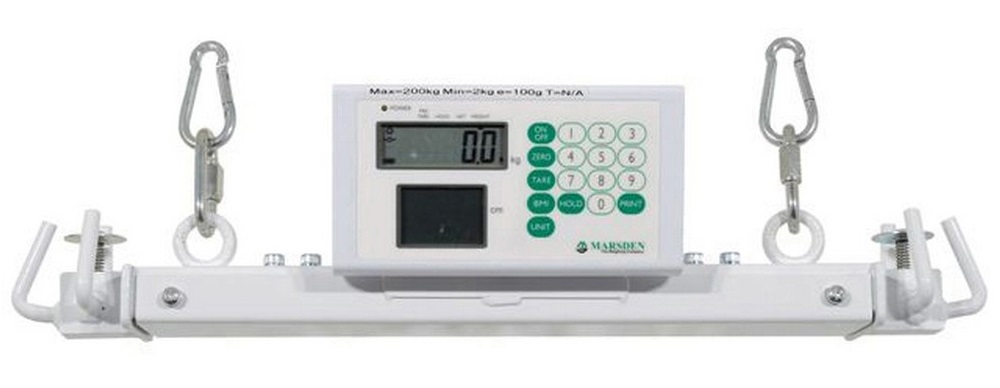
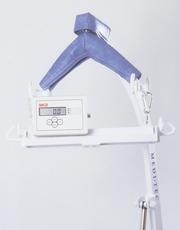
Included in this section of Living made easy for children are a range of mobile hoists and hoist scales (these attach to the spreader bars of most hoists).1
A hoist is a powered lifting device that can lift your child from one position and transfer them to another location. This eliminates the need for manual lifting of children who have difficulty moving themselves. For example, your child can be transferred from bed to a wheelchair or shower chair. Note however that hoists should not be used as a method of transport. An overhead tracking hoist or specific wheeled equipment (e.g. a wheelchair) should be used where your child is to be transported any distance.2-3
The hoists listed here are wheeled and freestanding which support your child in a sling suspended from a cantilevered arm (also known as the 'boom').2
It is a good idea to start thinking about using a hoist early on to transfer your child, rather than waiting until you have any pain. This reduces the risk of manual handling injuries (e.g. to your back), enabling you to continue to care for your child for many years to come.3-4
Before choosing a mobile hoist you need to consider all of the pros and cons and consider other possible options. Sometimes there are simpler solutions to overcome moving and handling difficulties. For example - changing the daily routine, rearranging furniture, training in a technique or using small items of handling equipment in a safe way.3
This is why it is important to have a manual handling assessment (usually with your child's occupational therapist or physiotherapist) so that every moving and handling situation is reviewed and safe solutions are found. This will also ensure that the type of hoist being recommended will meet your child's current and future functional needs.3 & 5
Some parents worry that a hoist will take too long to use. Often this is because they are unfamiliar with the equipment, or because the equipment is unsuitable for the task. After a thorough assessment to ensure the equipment is appropriate, and with training and practice, the process of using a hoist usually becomes quicker and easier.3-4
When considering a hoist, bear in mind the amount of space it needs. The base must be wide enough to remain stable, but narrow enough to manoeuvre through doors and hallways. Also consider the clear space required under furniture and fixtures to accommodate the frame of the hoist.2
Hoist scales can be useful when it is important to weigh your child. For example: medicine doses are often calculated on your child's weight, or you may need to monitor their growth and nutritional status. If you haven't already done so, it may be appropriate to consult with a dietitian. An alternative to hoist scales are children's chair scales.6-7
The equipment listed here may be provided by your local authority, depending on their eligibility criteria. If your child is eligible, the equipment will be provided on a long-term loan basis. Alternatively, you may be eligible for a direct payment from your local authority to purchase something suitable.
Read further advice on the use of hoists, or you may like to read our factsheet: 'Choosing a mobile hoist'.
View references and sources of further information ›To discuss sponsorship please contact DLF's Marketing Department.
Browse our list of local retailers by county and region
Find a retailer ›Use our interactive quiz AskSARA to guide you to advice and equipment.
Try AskSARA ›Would you like support from a trained advisor with no sales pressure?
Visit our centre ›DLF Data is the UK's only comprehensive database of daily living equipment.
Try DLF Data ›CPD-accredited courses aimed at professional healthcare providers and carers.
Find courses ›
Need general advice?
If you want general advice, please ask questions in Youreable parents corner.
Ask now »